Email Printer Friendly
8-year-old's sedation death spurs dad's effort to change laws
By Donna Domino, Features Editor

June 17, 2010 -- A Virginia man whose 8-year-old daughter died under conscious sedation during a routine dental procedure is trying to get a law passed that would require all dental offices to have and maintain defibrillators.

Raven Blanco died in March 2007 after receiving three drugs by Virginia Beach dentist Michael Hechtkopf, D.D.S. The drugs were used to calm the child while she had her teeth cleaned and calcium deposits removed, according to her aunt, Maria Blanco.

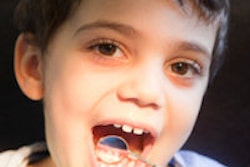
Raven Blanco.

But the girl became unresponsive and went into cardiac arrest while under sedation in Dr. Hechtkopf's office. She died about 90 minutes after being taken to a hospital.

Now Raven's father, Mario Blanco, said he's found a purpose: to push lawmakers to require defibrillators in dentists' offices and to inspect those offices more often to ensure the machines are functioning properly. He has contacted several state legislators urging them to develop such legislation, his sister told DrBicuspid.com.

Virginia does not currently require dental offices to have defibrillators, and inspections are done only after a complaint has been filed, according to Diane Powers, spokeswoman for the Virginia Department of Health Professions, which regulates the Virginia Board of Dentistry. Only the Legislature can pass laws requiring defibrillators, she noted.

Mario Blanco is also urging parents to closely question dentists to ensure they have working defibrillators and someone trained to do emergency resuscitation if problems arise.

"Do research before you bring your child in," he said during an interview with TV station WVEC. "Make sure the dentist has all the right equipment. If their equipment had worked, I think she'd still be here."

'Dental sedation complications'

Dr. Hechtkopf had given the child 1300 mg of chloral hydrate and 30 mg of hydroxyzine, according to dental board hearings on the matter. The autopsy showed Raven had a blood concentration of 24 mg/L of chloral hydrate -- three times the average range -- which the medical examiner considered lethal.

“She was very afraid about going to the dentist.”
— Maria Blanco, Raven Blanco's aunt

"She was very afraid about going to the dentist," Maria Blanco told DrBicuspid.com. "She was even afraid to brush her teeth."

"So he [Mario] thought it would make it less stressful for her," she said. The girl had not eaten prior to the procedure, as Dr. Hechtkopf had instructed, Maria Blanco recalled.

The girl died from "complications of dental sedation," the medical examiner said. In addition to chloral hydrate and hydroxyzine, nitrous oxide was also administered.

The dental board cited Dr. Hechtkopf for failing to have adequate clinical documentation of the girl's sedation record, specifically noting that her "vital signs and pulse oximetry readings were absent or poorly documented prior to the onset of the emergency event."

He was also ordered to complete record-keeping and risk-management classes. The dental board initially restricted Dr. Hechtkopf from administering any form of general anesthesia, sedation, or analgesia, but the restriction was later rescinded.

Dr. Hechtkopf agreed to a confidential settlement in a lawsuit filed by the family. He declined to comment for this story.

Sad trend

Recently, Mario Blanco attended memorial services in Richmond, VA, for Jacobi Hill, a 6-year-old boy who died in May following a dental procedure at Virginia Commonwealth University dental clinic, according to his sister.

The boy is one of four pediatric patients who have died in the past 15 months in the U.S. after undergoing sedation prior to dental treatment.

Sedation is becoming more common in pediatric dental procedures because so many children are coming into dentist offices at younger ages with caries, and they sometimes need extensive work, according to Indru Punwani, D.D.S., M.S.D., a spokesperson for the American Academy of Pediatric Dentistry (AAPD) and head of the pediatric dentistry department at the University of Illinois at Chicago.

Pediatric sedation is safe if done correctly, said Dr. Punwani, noting that it is routinely used without problems. "Sedation is used thousands of times every day in medical and dental procedures," he said. "It's an extremely common and safe procedure."

Mario Blanco has now started the Raven Maria Blanco Foundation in memory of his daughter. The foundation raises money to provide children all over the world with food, shoes, soccer balls, and school supplies.

He personally gave away more than 100 soccer balls while working on a construction project in South Africa, Maria Blanco said.

"He's doing better since starting the foundation," she said. "Before that he was just lost. So it's given him a motive to go on."

Copyright © 2010 DrBicuspid.com

Are pediatric sedation deaths on the rise?, May 18, 2010

Ill. crafts new dental sedation rules, April 15, 2010

Tragedies prompt sedation rule changes, September 30, 2009

Critics blast proposed Colorado sedation rules, July 13, 2009

Maine dental board challenges oral sedation safety, September 12, 2008


Last Updated hh 6/18/2010 3:29:09 PM

14 comments so far ...
6/17/2010 6:46:02 PM
Smirk
I don't agree with making AEDs mandatory in ALL dental offices. When was the last time you went to a general practitioner MD's office and he had an AED on hand? It's ludicrous. Now, if you're doing sedation procedures, as this dentist was, then, you are a FOOL to not have such equipment, along with a pulse oximeter. I can't believe he didn't have one. He obviously didn't know how to titrate his dosage properly either, seeing that her blood levels were 3 times the level considered safe for a child her weight. Does the board in his state not regulate who can and who cannot practice sedation??? Here, in Louisiana, we can't even write for Valium for oral sedation as of a couple of years ago without first being re-certified in oral conscious sedation, regardless of how long you have been in practice and doing so.
6/18/2010 1:22:24 PM
sampson
I highly recommend to my referring dentists that they have an AED in the office.  It is one more way to say to your patients that you care about them.  Police often carry AED's, they are in most major airports now.  They are relatively inexpensive and easy to maintain.  Dentists are healthcare providers and should be expected to have equipment that can treat life-threatening emergencies that do occasionally arise.  BTW, most of the physicians in my metro area have AED's in their offices.  You just don't see them out.
 
Regarding titration of oral sedation, you can't do that as well as you can with IV medications.  Oral medications take longer to take effect, are subject to variable first-pass metabolism, etc.  This is why oral sedation with stacked doses is inherently more dangerous than IV sedation.  The ability to use fast-acting, reversible agents improves the margin of safety.
 
I agree that doing sedation in the office without continuous monitoring is a bad idea and is frank malpractice.  Having regulations and requiring extra licensure to practice in-office sedation is a good idea and serves to protect the public.
 
Having an AED may not have saved this child's life.  The most common cause of cardiac arrest in children and infants is respiratory obstruction.  ACLS principles teach that in children, the focus must be on the respiratory system.  If you don't move oxygen into the lungs and subsequently the bloodstream, you can't get a heart rhythm back.  My guess in this child is that she had unrecognized respiratory depression, the dentist was not trained to establish an airway and could not ventilate the patient.  An AED would not have brought the child back if no ventilation was happening.
 
A very sad case...
6/18/2010 6:32:18 PM
tooth be told
Any office that does sedation should always have ALL the necessary equipment and as much training as necessary to keep the public safe, we can hopefully all agree on that general principle. If you don't, why on earth do you not agree? Please explain yourself, I would love to hear it.

Sedation, especially deep or unconscious sedation, always carries inherent risks; we should all know that. Sometimes people don't come back from this twilight consciousness to unconsciousnous, some call it simulated death! Thus, an avoidable, man-made, Nature-assisted tragedy occurs.

The value of sedation is to ease anxiety and fear. For some patients, it is invaluable. For some, it can be deadly. (Then again, one could argue that about any medicine that we prescribe or administer, but let's not go there.) Benefit, cost. How to balance it out properly, ethically and humanely?

We can't have anymore Raven Blancos, yet it seems to happen with depressing regularity. Didn't this happen a decade ago with a pedo patient in Southern California? Same %$#@ing issue, excessive dosage of good ol' chloral hydrate, plus a papoose board may have been involved as well. The amount of CH given seems ridiculous, given her body size and the average weight of an 8 year old child. (I don't think that was in the article.) Completely avoidable. Also, what the hell is going on with the pharmaceutical cocktail, that witches' brew our supposed peer and colleague dosed the poor child with? It seemed that she just couldn't take the overwhelming biochemical assault.

I have a daughter around the same age. I would be climbing the walls right now if I were poor Mr Blanco, probably for the rest of my life. Mr Blanco is now a man with an undeniable cause, he has now become a man on fire, he has now become an activist-crusader, opposing him is practically and politically impossible, as well as morally repugnant.

In addition to the necessary equipment and training ("Necessary" being determined and generally agreed upon by experts in anesthesiology, which we as dentists are mostly not.), there needs to be a complete and frank discussion with the patient. The possibility of death must be disclosed to the patient if we are continue to use sedation and deep sedation. This will probably not do anything to ease anxiety or fear, but it must be done.

Maybe there is the possibility of a dental field of anesthesiology for hygienists? (Far fetched, but you never know...they did  it for RN's.) That way, one person could concentrate completely on the actual anesthesia and life signs monitoring, allowing the dentist to be, well, a dentist.

Also, how about requiring any deep or full sedation procedure to be videotaped under consent? Sometimes weird and strange things happen with sedation. Maybe an agreed upon videotaping would protect both sides? After all, videos are everywhere, even on the cheaper disposable phones nowadays! Then again, I believe we should practice as if we were always being videptaped or watched. Also, video is super cheap nowadays, there's no logistical reason not to tape, tape, tape. (Ironic since everything's digital and soon there'll be no such thing as "tape".)          
6/21/2010 10:01:25 AM
isavesmiles
With the increase in number of sedation cases and the proliferation of supposed  "Training Courses" in the area of sedation , how about organized dentistry wake up and smell the roses. There is a need for better training in anesthesiology and the recognition of the specialty of dental anesthesiology. These individuals could administer anesthesia to the patient and they are trained in the administration and complications of anesthesia. It about time that the OS's stop the turf war and stop the fight to recognize of the specialty of dental anesthesia. If there was a dental anesthesiologist in the room administering the anesthesia there would have been one more happy 8 year old alive today. 
6/21/2010 11:26:35 AM
Friendly dentist
You guys don't get it. WHY was an 8 year old being sedated for a prophy? What was wrong with the parents that they would have their child sedated for a prophy? Are we mad? My pedodontist does not sedate, he's from the old school, but his patients are not being sedated to death. This is more a problem with our society and it is manifested in our profession. No one wants to be uncomfortable for 1 minute, so we poison our kids to get their teeth cleaned. Maybe this kid should have been strapped down for a prophy-- perhaps her parents wouldn't like that, but she would still be alive. We sedate kids because we are lazy and because we can make more money.

As for the guy who thinks it is not necessary to have an AED in his office: again , I ask, are you kidding me? They cost about 1,500 bucks. Are you that cheap? How many of you have a $100,000 CEREC but don't have a $1,500 AED?

Dr G
Email Printer Friendly


|| 15 Minutes to Excellence || ADA News || Advertising || Ask Marty || Case Archives || Case Study || Communities || Conferences || Contact Us || Education || Equipment For Sale || Facebook || Forums || Future of Dentistry || Home || Hygienist Resources || Jobs || Links || Mobile || News in Brief || Online CE || Opinion || Privacy Policy || Twitter || Vendor Connect || Video || XML/RSS ||

Copyright © 2013 DrBicuspid.com. All Rights Reserved.