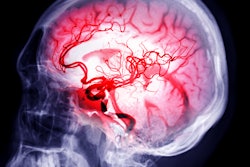
Cerebral small vessel disease (CSVD), a prevalent chronic condition affecting the brain, may be a risk for the faster progression of gum disease in older patients, according to a study recently published in the International Dental Journal.
Furthermore, common CSVD indicators, such as white matter hyperintensities (WMH) and cerebral microbleeds (CMB), were associated with worse periodontal measures, the authors wrote.
“CSVD may serve as a risk indicator for an accelerated progression of periodontitis in older adults,” wrote the authors, led by Shaobo Han of the University of Hong Kong Faculty of Dentistry (Int Dent J, February 10, 2026, Vol. 76:2, 109414).
The study analyzed data from 458 participants in the Taizhou Imaging Study (TIS). TIS enrolled residents ages 55 to 65 from three villages in China. Researchers included participants who had baseline brain magnetic resonance imaging (MRI) scans documenting CSVD markers, completed follow-up assessments in 2020 (including questionnaires, physical, and oral exams), and had at least one permanent tooth, excluding third molars, they wrote.
CSVD was identified by the presence of WMH and CMB on MRI. Periodontitis progression was measured by changes in mean probing depth (ΔmeanPD) and mean clinical attachment loss (ΔmeanCAL), as well as increases in tooth loss (ΔTL) and teeth with an interproximal attachment loss greater than 3 mm (tooth_CAL3).
Multivariable analysis found that CSVD was positively associated with ΔmeanPD (p < 0.01) and ΔmeanCAL (p < 0.01), while WMH was linked to ΔmeanPD (p = 0.01), ΔmeanCAL (p < 0.01), and tooth_CAL3 (p < 0.01).
CMB was associated with ΔmeanCAL (p = 0.03). In unadjusted models, CSVD was associated with ΔmeanPD (β = 0.157; 95% confidence interval (CI), 0.016 to 0.298; p = 0.029). WMH was associated with ΔmeanPD (β = 0.245; 95% CI, 0.075 to 0.415; p = 0.005) and ΔmeanCAL (β = 0.283; 95% CI, 0.046 to 0.519; p = 0.019), they wrote.
After adjusting for sociodemographics, behavioral and general health, and baseline oral health factors, CSVD remained associated with ΔmeanPD (β = 0.146; 95% CI, 0.049 to 0.244; p = 0.003) and ΔmeanCAL (β = 0.220; 95% CI, 0.057 to 0.383; p = 0.008). WMH remained associated with ΔmeanPD (β = 0.148; 95% CI, 0.030-0.265; P = 0.014) and ΔmeanCAL (β = 0.285; 95% CI, 0.088-0.482; P =0 .005).
In the adjusted model, WMH-exposed participants had 1.58 times more tooth_CAL3 (incidence rate ratio = 1.581; 95% CI, 1.185 to 2.109; p = 0.002), and CMB was associated with ΔmeanCAL (β = 0.226; 95% CI, 0.021 to 0.432; p = 0.031).
Nevertheless, the study had limitations. Causation between CSVD and accelerated periodontitis could not be confirmed, and the underlying biological mechanisms require further investigation, the authors added.
“The findings highlight the importance of prioritising oral health in patients with CSVD and implementing targeted dental treatments and maintenance care,” Han and colleagues concluded.