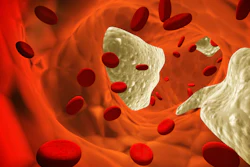
Gum disease bacteria Porphyromonas gingivalis may trigger a buildup of calcium in the heart’s aortic valve, leading to the life-threatening disease calcific aortic valve stenosis (CAVS), according to an American Heart Association (AHA) press release.
The results of a lab study suggest that treating periodontitis may help prevent this common heart valve disease, which currently cannot be slowed or prevented with medications. The findings were presented at the AHA’s Basic Cardiovascular Sciences Scientific Sessions 2026 in Boston.
“We were surprised by how much P. gingivalis (Porphyromonas gingivalis) was present in the calcified aortic valves,” said study co-author Dr. Chenyang Li, a PhD candidate in the department of cardiology at the State Key Laboratory of Cardiovascular Disease of Fuwai Hospital’s National Center for Cardiovascular Diseases, the Chinese Academy of Medical Sciences, and Peking Union Medical College, which are in Beijing, in the press release. “Although it was not one of the most abundant bacteria overall, it showed one of the largest differences between valves with CAVS and valves without CAVS.”
CAVS occurs when the aortic valve thickens and calcifies, restricting blood flow from the heart to the rest of the body. There may be no symptoms in the early stages of CAVS; however, it can cause fatigue, chest pain, shortness of breath, fainting, heart failure, and, sometimes, premature death as it progresses. Valve replacement surgery is the standard treatment for severe CAVS.
To study the connection, researchers measured different bacterial levels in human cardiac valve tissue removed during valve replacement surgery. They studied samples from individuals with CAVS and samples from people with other valve diseases, according to the press release.
To investigate how the periodontitis-causing bacteria might be associated with the development of CAVS, mice were given live and heat-inactivated P. gingivalis. Researchers then evaluated whether bacteria built up in the aortic valve, causing more calcification and aortic stenosis symptoms. Some mice were given antibiotics, while the interleukin-1 beta (IL-1β) inflammatory pathway was genetically disabled or removed in others, according to the researchers.
In those mice that were given live P. gingivalis, they had a buildup of bacteria in their aortic valves, more calcification, and aortic stenosis symptoms. However, prophylactic antibiotics reduced the effects.
In the valve cells of mice, the gum disease bacteria activated IL-1β, an inflammation-triggering protein made mostly by the body's immune cells. Furthermore, calcification and valve symptoms dropped significantly in the presence of P. gingivalis in those mice in which IL-1β was genetically deleted, according to the release.
Nevertheless, the study had limitations, including that the results have not been confirmed in humans. The researchers have started a clinical study to explore the association between periodontitis and CAVS, according to the press release.
“The key message is simple: take good care of your oral health,” Li said. “Good oral hygiene and treatment of periodontal disease are important for overall health and may also have benefits for cardiovascular health. While it is still too early to recommend specific treatments for preventing CAVS, our findings suggest that periodontal health could be an important piece of the puzzle.”
Disclaimer: "The study featured in this news release is a research abstract. Abstracts presented at the American Heart Association’s scientific meetings are not peer-reviewed, and the findings are considered preliminary until published as full manuscripts in a peer-reviewed scientific journal," according to the press release.