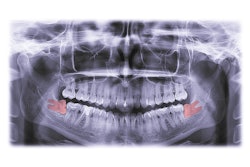
Patients scheduled for third-molar removal may experience high levels of anxiety, though the actual effect of the procedure may be less severe than they expected. The study was recently published in Advances in Oral and Maxillofacial Surgery.
Therefore, clinicians may want to provide preoperative reassurance to reduce patient anxiety and encourage more realistic expectations, the authors wrote.
“Patients undergoing third molar extraction generally hold more negative preoperative expectations than what they actually experienced postoperatively,” wrote the authors, led by Dr. Jurjen Schortinghuis of the Treant Scheper Hospital Emmen in the Netherlands (Adv Oral Maxillofac Surg, February 13, 2026, Vol. 22, 100636).
For the study, 38 patients ages 18 to 30 completed a 66-item questionnaire before surgery assessing their expectations about pain, functional limitations, complications, recovery, and social impact. Participants were consecutive patients referred for their first extraction of at least one mandibular third molar, with or without maxillary third-molar removal, they wrote.
Each item was scored from 0 (very positive) to 10 (very negative), and the results were compared with postoperative ratings collected one day and one month after the procedure. By comparing pre and postoperative scores for each item and the overall totals, the study aimed to identify discrepancies that could help improve patient counseling and reduce unnecessary anxiety.
Preoperatively, the average total expectation score was 3,171 out of a maximum of 6,600 compared with a significantly lower postoperative score of 1,868 (p < 0.001). In 45 of the 66 questionnaire items, patients reported significantly less discomfort than they had expected, particularly for surgery-related factors such as intraoperative pain, postoperative swelling, and the ability to perform daily activities, they wrote.
The anticipated effect on work or school was also overestimated (60 ± 25 vs. 29 ± 30, p < 0.0001), although food impaction was reported more often than expected, and overall well-being measures and recovery time (2.7 days) did not differ significantly.
No correlation was found between surgical methods and expectations, and while 15 of 38 patients read the provided information and 17 of 38 searched online, 32 of 38 patients discussed the procedure with relatives beforehand.
However, the study had limitations. The findings may have limited generalizability because the study population was relatively young, and age is known to affect recovery outcomes, the authors added.
“This study suggests that oral and maxillofacial surgeons can reassure patients by explaining that the actual experience is generally less severe than expected,” Schortinghuis and colleagues concluded.