For decades, hygienists have been taught to judge root cleanliness by feel: Run a sharp explorer over the root surface, and if it feels smooth, the job is done. Dr. Lee Sheldon, a periodontist in Melbourne, FL, says that standard has a fundamental flaw, and it's not hygienists' fault.
In this episode of The DrBicuspid.com Podcast, host Kevin Henry talks with Sheldon about research showing hygienists can competently clean root surfaces by feel to a depth of only about 4 mm below the gumline. Beyond that, calculus often goes undetected and unremoved, no matter how skilled the clinician. The fix, Sheldon says, is visualization rather than feel using a subgingival endoscope that lets hygienists see calculus deep in the periodontal pocket and remove it directly.
 Dr. Lee Sheldon.
Sheldon credits his longtime hygienist, Rebecca Caudill, with mastering the technique in 2000, a shift he says that transformed his practice's surgical caseload almost overnight. Once Caudill could reliably achieve visualized root cleanliness, many areas that once required periodontal surgery healed on their own.
Visualization is only one leg of what Sheldon calls his three-legged approach to periodontal healing. The second leg is salivary diagnostics: testing for aggressive bacteria before instrumenting, since disturbing bacteria-laden tissue without addressing the bacteria first can worsen outcomes. Sheldon estimates that roughly 25% of his patients need antibiotics, guided by DNA-based testing, to achieve the results he's after.
The third leg is occlusion. Sheldon checks whether a periodontally involved tooth moves under bite pressure and adjusts the bite to equalize stress across the arch, giving compromised tissue room to heal.
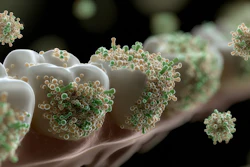
The conversation also covers a more recent discovery: microscopic islands of calculus that survive even endoscope-guided instrumentation. Sheldon and colleagues found that 30% to 50% of root surfaces can still harbor these micro-islands after cleaning, and that a brief application of 24% EDTA gel can help clear what instrumentation alone misses.
Sheldon also shares a case in which a radiograph appeared to show a clean root surface, only for the endoscope to reveal a sharp ridge of calculus invisible to feel or x-ray, a finding that changed the area's healing trajectory once removed.
Sheldon can be reached at [email protected]. Learn more at leesheldonlectures.com.
Listen to the full conversation below.
The comments and observations expressed herein do not necessarily reflect the opinions of DrBicuspid.com, nor should they be construed as an endorsement or admonishment of any particular idea, vendor, or organization. Some content may be AI-generated.