When Dr. Rajesh Vijay opened his first full-mouth implant company in the United Kingdom in the late 1990s, he says everyone told him he was crazy for focusing solely on full-mouth rehabilitation. He built it into the market leader, then retired in 2019. Then the pandemic hit, and a retired dentist with time on his hands started calling engineers.
In this episode of The DrBicuspid.com Podcast, host Kevin Henry talks with Vijay, founder of 21D and creator of ArchOS, about where full-arch treatment is headed in 2027.
The "21D" stands for 21st-century dentistry. It grew out of simulation models Vijay built with aerospace and general engineers, which produced a surgical guide accurate enough to deliver implants that fit a premade prosthesis. 21D launched in 2022 and delivered just under 11,000 implants last year, with 87% of its work being full-mouth rehab. Days with 16 to 24 cases are routine.
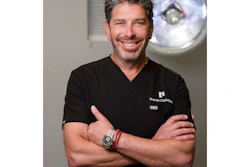
 Dr. Rajesh Vijay.
Vijay says he deliberately never used his own guides or prosthetics in the early clinics. Colleagues kept crediting his "magic hands," and he wanted general dentists to see that following the rules, not talent, delivers the result.
That philosophy drives his case for standardization. Vijay points to orthopedics, where hip and knee replacement became more consistent once manufacturers and surgeons agreed to do things one way. He argues that a dentist is "a specialist at fragmentation." Implants, he says, are just screws. The real magic is the bone, the prosthodontist, and the surgeon. Vijay wants manufacturers to offer a simpler selection.
ArchOS is his answer. Built on the standardized datasets 21D created, a clinician uploads a computed tomography (CT) scan, an intraoral scan, and a face scan. The clinician receives a complete plan in about 15 minutes, including the wax-up, alveoplasty, and implant positions. Vijay describes AI analyzing bone density across a CT scan, producing heat maps of stability and vascularity, and automatically spacing implants to rules the clinician sets. He insists the AI never replaces the clinician. It speeds calculations and sharpens judgment.
Asked about the biggest misconception of full-arch implants, Vijay says general dentists think they are more complicated than they are. Confidence, he argues, comes from understanding, and understanding should come before the next course.
He closes by explaining why he would rather license the model to clinicians near patients than see someone fly from Los Angeles to Manchester for treatment.
Vijay can be reached on LinkedIn. The ArchOS website includes a book-a-call button.
Listen to the full conversation below.