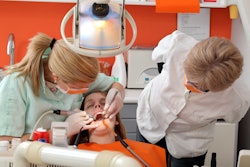
Women appear to be underrepresented in dentistry leadership roles, potentially due to societal challenges and a lack of mentorship opportunities. The study was recently published in the International Dental Journal.
Advancing women into leadership roles may require workplaces that support work-life balance plus gender equality initiatives, the authors wrote.
“Despite growing female participation in dentistry, leadership roles continue to show significant disparities,” wrote the authors, led by Amely Hartmann of the University of Mainz in Germany (Int Dent J, March 27, 2026, Vol. 76:3, 109522).
The study gathered data from national dental associations (NDAs) to assess workforce composition, employment trends, academic representation, specialization, and women’s participation in leadership globally. An online questionnaire was distributed to 189 NDAs across 133 countries through the FDI World Dental Federation’s Women Dentists Worldwide section, with data collected from January to April 2021, they wrote.
The survey was designed to gather country and association details along with demographic and sex-specific information related to professional and academic development. Responses from 44 NDAs in 37 countries were grouped into five geographic regions and analyzed relationships between gender distribution, specialization, pay gaps, and career advancement.
Women made up more than 50% of dental students in 80% of NDAs, with enrollment exceeding 60% in 44.5% of them. Despite increasing participation in dentistry, leadership roles remain unequal, with female deans and professors mostly in the 0% to 40% range and no significant regional differences (p = 0.843). Representation in academia was limited, as 34.2% of NDAs reported 0% to 20% female professors and 24.4% reported 21% to 40%. Female deans were reported at 0% to 20% in 41.5% of NDAs, 21% to 40% in 19.5% of NDAs, and only 12.2% of NDAs at 81% to 100%, they wrote.
Furthermore, scientific associations showed similar disparities, with 43.2% reporting 0% to 20% female presidents and 11.4% reporting 81% to 100%, alongside low representation in councils and assemblies. Although 67.6% of NDAs reported no gender-based pay differences and 29.7% had no data, only one NDA identified a 35% pay gap in the private sector.
The study had limitations. The low response rate may have introduced sampling and nonresponse bias and may highlight broader challenges in collecting gender-specific workforce data, the authors added.
“Further research is needed to understand the underlying causes of these disparities and to develop effective strategies to achieve gender equity in dentistry,” Hartmann and colleagues concluded.