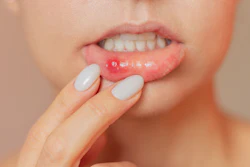
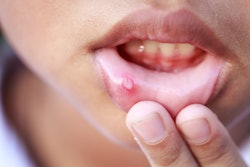
There may be a causal relationship between certain lifestyle habits, like consuming alcoholic beverages, and developing mouth ulcers, according to a study recently published in Health Science Reports.
However, there was a negative correlation between sleep duration and mouth ulcers, the authors wrote.
“This study is pioneering in elaborating the heritability between obesity, lifestyle habits, nutrients and mouth ulcers, highlighting the essential role of those exposures to mouth ulcers,” wrote the authors, led by Tong Zhang of the Chinese People’s Liberation Army General Hospital in Beijing (Health Sci Rep, July 16, 2026).
About 25% of the general population is affected by mouth ulcers. Since the disease's etiologies are unknown, ulcers are challenging to treat and prevent. Therefore, identifying the risk factors for mouth ulcers is critical in developing strategies for monitoring, prevention, and disease control, according to the study.
Previously, research has shown a possible correlation between oral ulcers and obesity, lifestyle habits, and nutrients. However, this relationship hasn’t been thoroughly explored.
To explore possible associations, genetic variants identified in genome-wide association studies of eight exposures were used as instrumental variables.
After adjusting for confounding factors like age, a significant positive association was found between drinking alcohol (odds ratios [OR] [95% confidence intervals [CI]): OR [95%CI] = 1.0184 [1.0049, 1.0321], false discovery rate [FDR] = 0.02) and body mass index (OR [95%CI] = 1.0104 [1.0050, 1.0157], FDR < 0.001) and mouth ulcers.
However, there was a negative association between sleep duration (OR [95%CI] = 0.9773 [0.9648,0.9899], FDR = 0.002) and mouth ulcers, the authors wrote.
Unfortunately, the study had limitations. Patients self-reported mouth ulcers, and they were not clinically diagnosed, the authors wrote.
“These mediators possess the potential to function as biomarkers for predicting mouth ulcers within specific populations, however, further examination is necessary to ascertain if these mediators can serve as biomarkers or therapeutic targets,” Zhang and team wrote.