The first time I heard Dr. Jeremy Krell talk about dentistry, he wasn't discussing crowns, composites, or chairside workflows. He was talking about capital.
That alone was unusual. Dentistry has historically been defined more by clinical innovation than by venture investment. Yet over the past several years, investors have begun paying closer attention to the profession. AI, diagnostics, prevention-focused therapeutics, and digital infrastructure are reshaping how dentistry is practiced and how companies are built around it.
Krell sits at the center of that shift. As founder and managing partner of Revere Partners, he launched the first institutional venture capital fund dedicated exclusively to oral and systemic health.
In this edition of Dental Duets, we discuss how a practicing dentist became a venture investor, what investors look for when evaluating dental startups, and why dentistry is suddenly attracting venture capital.
 Michael Ventriello.
Michael Ventriello: You built a successful career as a general dentist before founding Revere Partners. What compelled you to step away from clinical practice and move into venture investing?
Jeremy Krell: I loved treating patients and still miss it today, but my true passion was always technology. I was fascinated by how startups operate and how innovation could positively impact providers and their patients. That curiosity ultimately pulled me toward venture investing.
Did you begin this venture investing journey on your own?
No. It was important to involve members of the dental profession who deeply understand clinical practice and what happens chairside. That perspective is critical when evaluating whether a technology will actually work in the real world.
When you launched Revere Partners, dentistry did not yet have a dedicated institutional venture fund. What gap in the market convinced you this model was needed?
It quickly became clear that dental technology startups were struggling to access capital. Many investors simply did not understand the size and potential of the dental market.
At the same time, large dental corporations often lacked the ability to partner effectively with early-stage companies. That created a gap between innovation and commercialization.
You began with a research project. What did you learn?
After analyzing hundreds of transactions, we found that early-stage dental technology companies reached an average growth multiple of about 5.2 times in roughly 4.8 years. Years later, after reviewing thousands of companies applying for funding, those numbers have largely held true.
How does your clinical background influence the way you evaluate emerging dental technologies?
We evaluate companies from two perspectives: Do the numbers work, and will this actually work in dentistry? To answer those questions, we use a 26-point due diligence framework that analyzes more than 120 structured data points across clinical, operational, financial, and technical areas.
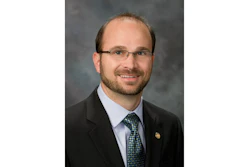
 Dr. Jeremy Krell.
Does being a dentist give you an advantage in that process?
Absolutely. Without clinical experience, it would be extremely difficult to understand whether a technology will succeed at the provider, patient, and practice levels. That clinical perspective helps us avoid blind spots even when the numbers appear attractive.
Many companies today claim AI as a core capability. From an investor's standpoint, what separates meaningful AI from marketing hype?
AI is definitely the future, but it is also a complicated investment category because it evolves so quickly. Sustainable AI companies have deep, unique datasets that are carefully annotated and capable of supporting sophisticated models. They also need to solve real clinical problems that generic AI tools cannot easily address.
Is the shift toward prevention and diagnostics attracting investors?
Without a doubt! In many ways, 2026 could become the year of preventive and diagnostic dentistry. Technology has improved dramatically, and reimbursement is evolving as standards and codes are recognized by insurers. Once prevention becomes economically viable, investors begin paying attention.
Do you believe consolidation in the dental AI sector is inevitable?
Not only is it inevitable, it is already happening. We've already seen mergers and acquisitions in the dental AI space, and as more solutions enter the market, consolidation will continue. Some companies will merge, others will be acquired, and some will pivot as the technology evolves.
Beyond AI, what innovations are poised for rapid adoption in dentistry?
Three areas stand out: technologies that make dentistry more objective rather than subjective, solutions that enable connected dentistry and interoperability, and innovations supporting medical-dental integration and the mouth-body connection.
Dental service organizations (DSOs) now play a major role in technology adoption. Do they accelerate innovation or create barriers for startups?
Enterprise sales are never easy, but DSOs can be excellent pilot partners. Many DSOs are willing to test technologies if they solve a clear operational pain point. The key is demonstrating measurable business value.
What does that business value look like?
DSOs focus heavily on EBITDA [earnings before interest, taxes, depreciation, and amortization] and enterprise value. If a technology can clearly demonstrate that a dollar invested produces a measurable return in EBITDA, it becomes much easier for that company to gain traction in the DSO market.
Is medical-dental integration becoming a viable investment category?
Yes, and here's why: We already spend roughly $170 to $180 billion annually on oral healthcare in the United States. When you add oral care products and insurance premiums, the market approaches $280 billion. When connections to conditions like Alzheimer's, diabetes, and cardiovascular disease are considered, the opportunity becomes even larger.
What separates fundable companies from good ideas?
Dentists are incredibly innovative. They are part doctor, part engineer, and part artist. But not every solution becomes a scalable company. Successful startups define a solution, iterate with user feedback, validate adoption, and prove their business model can scale.
What metrics do investors want to see?
At Revere Partners, we look closely at traction. That means consistent growth month over month or quarter over quarter and clear signals that the market is responding positively to the product.
You recently co-chaired the Dental VIP Summit. Did the event achieve its goal?
We are extremely proud of the results. About 250 leaders from across dentistry attended, and the event sold out with a waiting list. The audience included many of the industry's key decision-makers.
Will the summit grow next year?
Yes, but our goal is to keep it highly curated. Growth will likely come more in terms of impact rather than simply increasing attendance.
What excites you most about the future of dentistry?
This is an exciting time for dentistry. AI will continue to evolve, but we are also seeing advances in robotics, automation, visualization, surgical planning, and regenerative therapies that will transform how dentistry is practiced.
Final thoughts
Dentistry may not have historically attracted venture capital, but that reality is changing quickly.
As technologies mature and the connection between oral and systemic health becomes clearer, the profession is beginning to look more like a modern health care innovation sector.
For investors like Krell, that transformation represents both an opportunity and a responsibility: helping shape the future of dentistry while ensuring the profession's clinical foundation remains strong.
Dr. Jeremy Krell, MBA, is the founder and managing partner of Revere Partners, the first institutional venture capital fund dedicated exclusively to oral and systemic health technologies. A practicing dentist turned investor, Krell focuses on advancing innovation across AI, diagnostics, and preventive healthcare. He is also the founder of Rise Health and chairs the Workman School of Dental Medicine Board of Advisors at High Point University. Connect with him on LinkedIn.
Michael Ventriello is the co-founder and chief communications officer of Personify Group, Dentistry's Brand Growth Partner. He is also the owner and founder of the PR-forward dental marketing communications agency, Ventriello Communications. Ventriello has more than two decades of experience launching and promoting innovations in digital dentistry, dental diagnostics, teledentistry, oral-systemic health, laser dentistry, digital imaging, preventive dentistry, and AI. Connect with him on LinkedIn.
The comments and observations expressed herein do not necessarily reflect the opinions of DrBicuspid.com, nor should they be construed as an endorsement or admonishment of any particular idea, vendor, or organization.