April is recognized as Oral Cancer Awareness Month, but according to dental hygienist, educator, and nationally recognized oral cancer advocate Debra “Debbie Z” Zafiropoulos, awareness should never be confined to a single month.
She emphasizes to clinicians, “Oral cancer awareness should be a daily priority in every dental practice. Every interaction with a patient or member of our community is an opportunity to educate about the importance of early detection. Screening for oral cancer should happen every day, with every patient.”
That message is increasingly urgent.
According to the American Cancer Society, more than 60,000 Americans will be diagnosed with oral or oropharyngeal cancer this year, and nearly 13,000 will die from the disease.
What makes these numbers particularly troubling is that oral cancer remains highly survivable when detected early, yet the overall five-year survival rate remains about 68%. When diagnosed at a late stage, survival rates can fall dramatically.
Complicating matters further is the rapid rise of HPV-related oropharyngeal cancers, which are now among the most common HPV-associated malignancies in the U.S. These cancers often occur in patients who do not present the traditional risk factors of tobacco and heavy alcohol use.
For Zafiropoulos, this reality underscores a critical truth: Dentistry occupies one of healthcare’s most important frontlines in early cancer detection. A longtime educator on oral cancer screening technologies, including VELscope, OralID, and OralDNA salivary HPV testing, Zafiropoulos is also the developer of the SOSA method (screening for oral and skin abnormalities) and founder of the nonprofit National Cancer Network.
In this edition of Dental Duets, we explore why vigilance in oral cancer screening may be one of the most important responsibilities in modern dentistry.
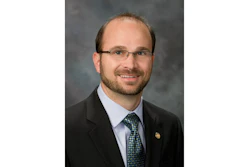
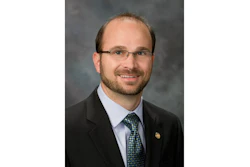
 Michael Ventriello.
Debra Zafiropoulos: Great question! One of the biggest misconceptions about oral cancer is that it’s rare. It’s simply under-recognized and too often under-screened.
Why?
One of the main reasons is that early oral abnormalities rarely cause pain. They may appear as a faint red patch, a subtle white lesion, or a small tissue change that patients -- and sometimes clinicians -- dismiss.
How can clinicians become more observant?
In my hands-on training, I offer several visual cues, like looking for “a sesame seed, a poppy seed, a grain of rice”. This resets the clinician’s visual perspective to be much smaller than what they typically look for.
Underdiagnosed and undertreated oral abnormalities disrupt everyone’s life. All too often, they are dismissed or excused away as trauma, like a pizza burn, or something to watch. Unfortunately, for our patients, these abnormalities can quietly progress for months before being taken seriously.
Plus, previous definitions of high-risk patients have changed over the past 15-20 years, correct?
Yes, this is a big shift! Historically, we associated oral cancer with heavy tobacco and alcohol use. But the disease profile is changing, particularly with the rise of HPV-related cancers. We are seeing cases in patients who do not fit the traditional risk profile, and they are skewing toward younger, sexually active patients.
I often remind clinicians that oral cancer doesn’t always announce itself loudly. Sometimes it whispers, and if we’re not listening carefully, we miss it. This is why vigilance in dentistry is so critical.
Despite advances in technology, the overall five-year survival rate for oral cancer still hovers around 68%. Why do you believe dentistry has struggled to significantly improve early detection rates? Is there an overreliance on technology, a false sense of confidence?
The challenge is being consistent and observant. Some think it’s the use of technology, or in our current environment, relying on AI. It isn’t technology or AI. It’s being consistent and observant whether you use traditional, yet thorough screening protocols or if you incorporate the latest adjunctive screening tools.
What’s more, many clinicians believe they are performing oral cancer screenings during routine oral exams. But in reality, those checks may only last a few seconds. A quick glance inside the mouth is not the same as a comprehensive oral abnormality examination.
Speaking of a comprehensive screening protocol, you’ve developed your own. Tell us about it.
Early detection requires a systematic approach, which is why I developed the SOSA protocol (screening for oral and skin abnormalities), a reliable and systematic approach for clinicians and patients to identify abnormalities.
What makes SOSA different than other oral exam and screening protocols?
SOSA identifies risk factors, provides a thorough, duplicable exam of the head and neck, synchronized palpation of the lymph nodes, and comprehensive evaluation of high-risk tissue areas.
SOSA training allows the clinician and the patient to be proactive in finding abnormalities and understand the importance of self-evaluation, reevaluation after a short period of time, and the value of a qualified and defined referral for further evaluation with a competent clinician who understands the delicate nature of providing a definitive diagnosis rather than simply guessing based on what the abnormality looks like.
How is skin screening part of this protocol? Isn’t it outside the dental clinician’s practice scope?
Including skin screening in an oral abnormality exam is not only appropriate, but it is also increasingly considered a best practice in a comprehensive head and neck evaluation.
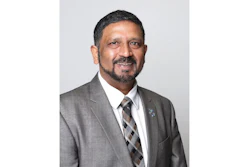
 Debra Zafiropoulos.
How so?
Including skin screening in dental exams is justified, because patients see the dental office more often than a primary care physician. Patients do not routinely see a dermatologist and this fact positions the dental clinician as a critical force for early detection.
But are dental clinicians qualified to think outside the mouth?
Absolutely! Here’s why: Dental clinicians routinely evaluate the face, lips, ears, neck, and scalp. In SOSA, we include the hands, nails, and tops and soles of feet, along with any other areas of exposed skin the patient presents.
It also should be noted that when it comes to skin screening, we are not diagnosing, we are identifying suspicious areas, documenting them, and presenting findings for a more qualified referral to a dermatologist.
I would imagine skin exams may be more important in warmer climates. Is this a fair assumption?
I live in Florida and Greece, where we see a lot of skin, and both areas are high-risk zones for skin cancer, but the risk still exists for those who live in cooler climates with more seasonal sun exposure. In fact, skiers may be particularly at risk due to the reflective properties of snow and high-altitude UV radiation.
By the way, skin cancer statistics are just as concerning as those of oral cancer. The American Cancer Society reports that in 2026, about 8,510 people are expected to die of melanoma (roughly 5,500 men and 3,010 women).
There are several reasons for this, including that outdoor workers do not use sunscreen and misinformation on social media that claims sun exposure without sunscreen is healthier.
But the main reason, just like oral cancer, is a lack of awareness. If we, as dental clinicians, can raise awareness of oral cancer and skin cancer twice a year, think of the huge positive impact we can have on early detection and survival rates.
Here’s the elephant in the room: Recently, we’ve seen a major rise in HPV-related oropharyngeal cancers, particularly among adults who may not fit the traditional tobacco-and-alcohol risk profile. How should dental professionals rethink their screening protocols in light of this epidemiological shift?
It’s a very large elephant! HPV-related cancers have fundamentally changed the oral cancer landscape.
Many patients affected today are younger, otherwise healthy, and have no history of tobacco use. That means we can no longer rely on outdated assumptions about who is at risk.
Now, clinicians not only should ask, “Are you flossing?” but also, “Are you sexually active orally?” How in the world does that get incorporated into the chairside conversation with confidence?
For some, it’s a tough exchange for sure. However, asking sensitive questions in a professional setting shouldn’t feel awkward. In our team trainings, we practice normalizing the flow and depersonalizing the delivery.
For example, we use simple words like “Mr. Jones, we ask all our patients these questions because certain infections can affect the oral and throat area and add to a health issue.”
Above all, be neutral and nonjudgmental, adhere to clinical observations, be brief, ask only when relevant, document, and tie the question together with the health outcome.
Remember, you are not asking about behavior, you are assessing risk exposure relevant to disease, addressing HPV-driven cancer statistics, and practicing modern risk-based, root-cause-based dentistry.
You’ve built a national reputation as “The Vigilant Hygienist.” What does vigilance look like in a modern dental practice, and where are clinicians most likely to miss early warning signs?
Vigilance is more than a procedure. It is a mindset. It means being present with the patient in front of you and recognizing that every appointment is an opportunity to detect and discuss findings early. Envision yourself as the Sherlock Holmes of oral abnormalities.
Doesn’t the good detective work required for vigilance take time?
Yes, vigilance requires time management, so you can do the right thing without the stress of time or reimbursement looming over your conscience. This includes palpating lymph nodes when the schedule is tight, examining the lateral borders of the tongue, and asking a patient about a lesion that hasn’t healed in two weeks.
Vigilance is the team working together to appoint the patient for reevaluation or assisting them in a referral for a more definitive diagnosis, with reassurance that they will be taken care of. It’s in the conversation that we eliminate fear and lay the foundation of care.
Most patients visit their dentist more frequently than they see their primary care physician. Does this place dentistry in a unique position to serve as the healthcare system’s frontline screening network for oral cancer?
Without a doubt! I believe that dentistry is the most underutilized form of medicine. Patients see their dentist twice a year but may only see their physician when symptomatic. That means dental professionals are often the only healthcare providers routinely examining the oral cavity.
If every dental practice performed SOSA or an improved comprehensive oral abnormality screening consistently, dentistry could become one of the most powerful early-detection networks in healthcare. Dentistry sits at the frontline of oral-systemic illness detection -- we have to fully embrace that responsibility.
April is Oral Cancer Awareness Month, yet you often say limiting awareness to one month misses the point. Why should every month be Oral Cancer Awareness Month in every dental practice?
Oral cancer awareness shouldn’t be seasonal; it should be standard practice. Awareness campaigns are important, but cancer doesn’t follow a calendar. Screening should happen every day in every operatory with every patient, from children to the edentulous adult. If clinicians commit to performing comprehensive oral screenings at every visit, oral cancer awareness becomes embedded into routine care rather than limited to a single month.
Author's note: Debra and Michael dedicate this column to the memory of Brian Hill, the co-founder of The Oral Cancer Foundation. Hill was an oral cancer survivor who was instrumental in increasing awareness for the importance of early detection to reduce disfiguring surgery and improve mortality rates. He was a dedicated educator of dental clinicians and a tireless advocate for patients, survivors, and families affected by oral cancer. Read Brian's obituary here.
Debbie Zafiropoulos is a leader, educator, and influential voice in the health and wellness industry. As CEO of the OralED Institute, she helps organizations through innovative education, collaboration, and strategy. Zafiropolous also serves as a partner in education for the Wellness Dentistry Network and co-founded MoradoASC, where she mentors emerging speakers and professionals. Contact her at [email protected], and connect with her on LinkedIn.
Michael Ventriello is the co-founder and chief communications officer of Personify Group, Dentistry's Brand Growth Partner. He is also the owner and founder of the PR-forward dental marketing communications agency, Ventriello Communications. Ventriello has more than two decades of experience launching and promoting innovations in digital dentistry, dental diagnostics, teledentistry, oral-systemic health, laser dentistry, digital imaging, preventive dentistry, and AI. Connect with him on LinkedIn.
The comments and observations expressed herein do not necessarily reflect the opinions of DrBicuspid.com, nor should they be construed as an endorsement or admonishment of any particular idea, vendor, or organization.