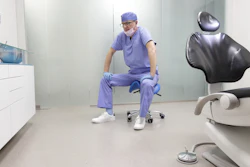
Extended exposure to high-intensity lighting in dentistry is a growing health concern. It may increase the risk of visual disorders, according to a press release from the Sichuan University West China School of Stomatology.
Further, exposure to focused light sources without sufficient protection may be linked to ocular damage such as age-related macular degeneration and glaucoma, according to the release dated March 30.
“We aimed to determine how chronic photodamage from dental light sources influences the stability of the blood-retinal barrier and the retinal vascular microenvironment,” Dr. Junyu Chen, PhD, a professor at the university, said in the release.
Previous research has examined acute light-induced retinal injury, but the long-term effects of chronic, low-to-moderate exposure remain unexplored. This gap underscores the need to evaluate how sustained dental lighting affects retinal structure and function, particularly the blood-retinal barrier that is essential for visual health, according to the release.
The researchers assessed whether prolonged exposure to dental lighting contributes to retinal damage and, if so, uncover the underlying mechanisms. They used an epidemiological and experimental approach to analyze chronic exposure effects on retinal health. Additionally, a cross-sectional survey of 14,523 dentists and non-dentists was conducted to compare the prevalence of vision-related disorders.
To mimic real-world conditions, a chronic photodamage model was developed in rats exposed to halogen, white LED, and blue LED lighting at 200 and 1000 lx for eight hours per day over six months. Retinal changes were evaluated using optical coherence tomography, histological analysis, and advanced 3D imaging of the retinal vascular network. Also, RNA sequencing was performed to identify molecular and inflammatory changes linked to prolonged light exposure, according to the release.
Dentists had a significantly higher prevalence of vision-related conditions, with approximately a 3.6 times greater risk than non-dentists. In experimental models, chronic exposure, particularly to blue and white LED light, led to substantial retinal damage, including disruption of blood-retinal barriers, reduced capillary density, loss of vascular branching, and activation of inflammatory signaling including the NF-κB signaling pathway.
However, further research is needed to create targeted prevention and treatment strategies, including improved lighting technologies, to protect the visual health of dental professionals, according to the release.
“Chronic light exposure triggered inflammation, with increased recruitment of immune cells and activation of the NF-κB signaling pathway,” Chen added. “There changes were associated with impaired retinal energy metabolism and degeneration of vision-related structures.”