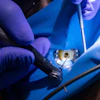
Clinicians prescribed antibiotics -- often without medical justification -- to approximately 1 in 5 patients who underwent nonsurgical root canal therapy, according to a story published recently in the Journal of Dentistry.
Antibiotic prescribing varied by several factors, including the dentist and patient involved, the authors wrote.
“These findings highlight persistent gaps between guideline-based recommendations and real-world practice, underscoring the need for targeted antibiotic stewardship interventions,” wrote the lead author, Dr. Alan Law, chief clinical officer, specialty practices, and a research professor with the division of endodontics at the University of Minnesota (J Dent, July 8, 2026).
Since the rise of antimicrobial resistance has become an important public health issue, global efforts have attempted to decrease unnecessary use. Therefore, the upward shift in prescribing for endodontic procedures raises concerns. Inappropriate antibiotic prescribing, specifically when driven by habit, diagnostic uncertainty, or pressure from patients, has the potential to speed up resistance, according to the study.
Currently, the American Association of Endodontists and other professional organizations have released clinical guidelines emphasizing limited reasons to prescribe antibiotics for endodontics. The guidelines state that antibiotics are appropriate for patients with significant systemic conditions, as well as fever, malaise, or cellulitis.
For the study, researchers investigated dentists' and endodontists’ antibiotic prescribing patterns across a range of practice settings using data from the U.S. National Dental Practice-Based Research Network.
For the study, 153 dentists enrolled 1,723 patients who needed root canals. Clinical, imaging, and demographic data were collected. The main outcome of the research was whether systemic antibiotics were given to patients after root canal treatment.
Clinicians prescribed antibiotics to 322 (19%) patients, the authors wrote.
In adjusted models, patient conditions appeared to factor into whether antibiotics were prescribed. Patients with tenderness on being touched (odds ratio [OR] = 1.40; p = 0.046) or who had apical periodontitis (OR = 1.56; p = 0.004) were more likely to receive antibiotics, they wrote.
Furthermore, age, race, and other factors appeared to determine whether antibiotics were prescribed. Antibiotics were much less likely to be prescribed by clinicians who were younger than age 45 (OR = 0.47; p = 0.02), non-Hispanic white (OR = 0.40; p = 0.01), or if they affiliated with large group or academic practices (OR = 0.25; p = 0.007).
Patients with only a high school diploma or with a racial-ethnic minority background were prescribed antibiotics more often (p < 0.05), the study's authors wrote.
The study had several limitations, including that data were limited to patients who had one nonsurgical root canal, and decisions dentists made beyond the immediate treatment were not included, the authors wrote.
“Nearly one in five patients undergoing RCT (root canal therapy) were prescribed antibiotics, often without clear clinical indications,” Law and the collaborators wrote.