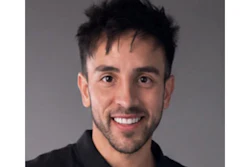
For Anthony Herrera, a career in orthodontic assisting didn't start as a career plan -- it began as a way to pay for his own braces. At 16, he went to work for his orthodontist, and what began as a transaction turned into a 14-year chairside career driven by a genuine passion for the work and the patients it serves.
In this episode of the Dental Assistant Nation podcast, Herrera joins Host and DrBicuspid.com Editor-in-Chief Kevin Henry for a conversation about what makes orthodontic assisting distinctive, what separates good assistants from exceptional ones, and why patient trust is the foundation on which everything else is built.
Herrera's core philosophy is straightforward: Treat every patient as if they are the only thing that matters. It sounds simple, but he makes the case that it changes everything downstream. When patients feel seen and understood, they follow treatment protocols more consistently, they ask fewer anxious questions after they leave the office, and they trust the assistant's explanations -- which means the doctor's time is spent on clinical decisions rather than reassuring patients.
That philosophy gets especially tested with teenage patients, who are navigating the social and emotional weight of braces at an age when appearance feels paramount. Herrera's approach with teens is pre-education -- walking patients through exactly what is happening at each appointment, from wire changes to elastic mechanics, before they feel confused or worried. A patient who already understands why their teeth are sore leaves confident rather than anxious.
On the clinical side, Herrera offers a deceptively simple technique that many assistants overlook: When removing O-ties or wires, stabilize the tooth from the lingual surface with a finger before applying any movement. Because orthodontic teeth are mobile by design, that small act of stabilization dramatically reduces patient discomfort during what would otherwise be an unexpectedly painful moment.
The conversation also covers IsoRetract, a mouth retractor Herrera has incorporated into his workflow for bonding appointments. He describes its value in practical terms: rounded edges designed for oral anatomy, 360° suction in the tongue housing that keeps the molar region dry, and buccal retraction wide enough to give full molar-to-molar visibility. For bracket placement -- a procedure assistants can perform legally in Utah -- that combination of isolation and access meaningfully improves efficiency and outcomes.
Assistants with questions for Herrera can reach him directly through isoretract.com.
Listen to the full conversation below.