Peri-implantitis may be a dentist-initiated complication of dental implant treatment; therefore, taking steps like reducing clinician-related mistakes may reduce the risk. The review article was published on June 8 in Periodontology 2000.
Primarily, dentists should try to avoid errors that lead to the micro-rough implant surface being exposed, the authors wrote.
“There is a growing consensus that the majority of cases of peri-implantitis arise from clinician-related errors in implant therapy, and in these cases, peri-implantitis should be regarded as a complication of implant therapy rather than a disease in the classical sense,” wrote the paper's lead author, Stephen Chen of the University of Melbourne Faculty of Dentistry in Australia.
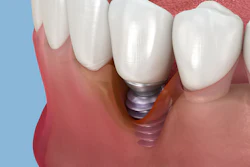
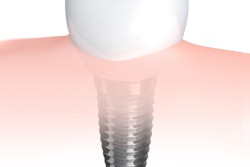
The high occurrence of peri-implantitis is a growing concern, and there is a widespread agreement that many cases are complications caused by dentist-related errors. A main predisposing factor for peri-implantitis is the exposure of the micro-rough implant surface to the peri-implant sulcus. This breeds biofilm contamination.
Though there is mounting evidence linking mistakes in diagnosis, surgery, and prosthetic management to early crestal bone loss, the review sought to detect surgical and prosthetic factors that may cause micro-rough surface exposure.
There are several co-factors for peri-implantitis once micro-rough surfaces are exposed that are influenced by dentists. These co-factors include:
- Patient compliance
- A history of gum disease
- Uncontrolled generalized factors and/or habits
- Lack of keratinized mucosa
- Prosthetic misfit
- Prostheses that can’t be cleaned
- Failure to detect early bone loss or mucosal changes
8 ways dentists can reduce the risk of peri-implantitis
The paper's authors recommended the following steps clinicians can take to decrease the risk of peri-implantitis among patients:
- Adhere to the principles of diagnosis, surgery, prosthetics, and follow-ups to avoid exposing the micro-rough implant surface to the peri-implant sulcus.
- Avoid preventable mistakes that stem from inappropriate diagnosis and planning, like placing implants in sites with reduced crestal bone width.
- Implant surgeons must have a strong understanding of tissue biology and training in grafting techniques to avoid peri-implant defects and incomplete bone regeneration.
- Avoid using prostheses with wide emergence angles since they can cause early crestal bone loss and heighten the risk of peri-implantitis.
- Since cemented restorations are linked to a greater risk of peri-implant infections, they shouldn’t be used.
- Clinicians should be aware of co-factors, including patient noncompliance and improper follow-up and prosthesis misfit, that may contribute to the development and progression of peri-implantitis.
- If early crestal bone loss or changes to peri-implant thickness and width occur, clinicians should inform patients of their increased risk of developing complications, and they should be monitored more often.
- Patients should be seen more often for supportive peri-implant care if the position or the design of the implant makes it difficult to clean.
“Success depends on meticulous diagnostics and planning, proper surgical/prosthetic execution, cleansable prosthesis design, and proactive maintenance to detect early bone loss and soft tissue changes,” Chen and colleagues wrote.