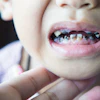
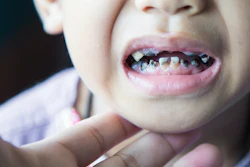
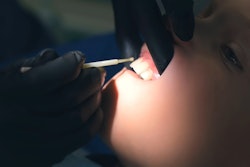
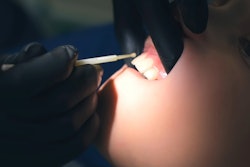
Silver diamine fluoride (SDF) may promote remineralization in teeth, preventing and slowing the progression of caries, according to a review recently published in the Journal of the American Dental Association.
However, further research may be needed to compare SDF concentrations and application times, the authors wrote.
“Results of in vitro studies and a crossover clinical trial were positive for silver diamine fluoride in remineralization,” wrote the authors, led by Gerana Araujo de Lucena Lira, MSc, of the São Leopoldo Mandic Institute and Research Center in Brazil (JADA, March 17, 2026).
The goal of the review was to evaluate the remineralizing effects of 38% SDF on carious enamel and dentin in primary and young permanent teeth. Researchers conducted a literature search on August 8, 2025, across electronic databases, including randomized clinical trials, in vitro, in vivo, and cohort studies, they wrote.
Based on eligibility criteria, 46 articles were initially selected for full-text review. After excluding 17 studies, 29 articles met the inclusion criteria. The final selection included 25 in vitro studies, two randomized clinical trials, one crossover randomized clinical trial, and one combined in vivo and in vitro study.
In vitro studies and a crossover clinical trial showed positive results for SDF in promoting remineralization. Comparisons with other materials, such as fluoride gel, casein phosphopeptide-amorphous calcium phosphate (CPP-ACP), peptides, and glass ionomer cement (GIC), confirmed SDF’s effectiveness and suggested improved results when combined with agents like sodium fluoride and GIC. SDF, fluoride varnish, and CPP-ACP were all effective in improving remineralization in both primary and permanent teeth, even when used independently, they wrote.
Furthermore, debate was common about whether rinsing after SDF application in the silver-modified atraumatic restorative technique (SMART) affects GIC adhesion and the longevity of SDF’s antimicrobial action. Overall, while SDF slightly reduced GIC adhesion in healthy dentin, the SMART technique was found to remain an effective, minimally invasive approach for remineralization and caries control.
The review, however, had limitations. With only 10% of studies being randomized clinical trials, more high-quality trials using standardized methods and clinically relevant outcomes are needed, the authors added.
“Although the results are promising, the lack of more robust clinical studies limits the consolidation of this evidence and its safe application in daily clinical practice,” they concluded.
For more DrBicuspid coverage on silver diamine fluoride, check out these related articles:
- SDF comparable to sealants for preventing cavities
- SDF may help prevent dental erosion
- SDF the answer to reducing tooth sensitivity
- These topical medications may prevent caries better than NSF, CHX
- Can dental hygienists apply and bill insurance for silver diamine fluoride?
- AAPD panel conditionally recommends SDF