An 11-year-old had hairlike structures in the space between her teeth and gums, which is believed to be the eighth reported case of intraoral hair growth. The case report was published on May 26 in the Journal of Oral and Maxillofacial Surgery, Medicine, and Pathology.
She was diagnosed as having a dentigerous cyst, and during a biopsy, the hair, which was adjacent to the cyst wall, was removed. However, the hair grew back and did not stop until the girl began menstruating, the authors wrote.
“This case suggests a rare association between ectopic hair-like structures and a dentigerous cyst, with potential hormonal influence,” wrote the study's lead author, Dr. Shinnosuke Nogami of the division of oral and maxillofacial reconstructive surgery at the Tohoku University Graduate School of Dentistry in Japan.
An 11-year-old girl with hair growing from her gums
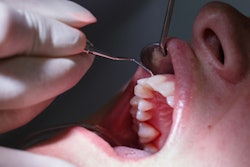
Initially, the girl presented at a dental clinic after her mother saw hairs protruding from her gums. The girl had the hair, which was sticking out from the palatal gingival sulcus of the upper right central incisor, removed by a professional at a dental clinic. However, it grew back six weeks later. Therefore, she was referred to a hospital for evaluation, according to the case report.
At the hospital, she was examined, and there were no remarkable extraoral findings. The girl underwent a computed tomography scan, which revealed a low-density lesion around the crown of an impacted maxillary right canine, suggesting a dentigerous cyst. Also, root resorption was seen in the maxillary central and lateral incisors bilaterally.
Additionally, a biopsy was performed under local anesthesia to evaluate the “hairlike structures” and the cyst. Inside the cyst, a hairlike bundle was found. Cystic tissue and the hair bundle were extracted, the authors wrote.
The samples were examined, revealing a “cyst wall composed of chronic inflamed fibrous connective tissue lined with irregular stratified squamous epithelium and no hair follicle-like structures.”
Once the girl began menstruating about five months later, the hairlike structures stopped growing. More than a year after the procedure, the girl was in good condition, and there was no evidence of recurrence, they wrote.
Things to consider
If a woman presents with hairlike structures growing in the oral cavity, clinicians should conduct a thorough medical interview, including a physical exam, and recommend a gynecological consultation for potential menstrual cycle regulation, the authors wrote.
“In conclusion, the etiology of oral hair growth remains unclear, though [it] has been proposed to involve genetic predisposition, endocrine abnormalities, ectoderm misplacement, trauma, and inflammation-related development of ectopic dermoid cysts,” Nogami and colleagues wrote.