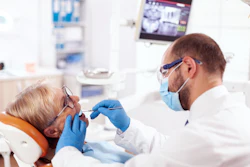
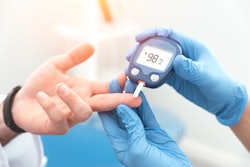
Dental offices may be an underused resource for screening diabetes, offering a chance to identify undiagnosed high blood sugar through chairside testing, according to a study recently published in the Journal of Dentistry.
Additionally, patients with gum disease appeared to have higher glycated hemoglobin (HbA1c) levels, the authors wrote.
“This study confirms that screening in a secondary care setting may represent a valid opportunity to identify patients with otherwise un-recognised pre-diabetes or diabetes,” wrote the authors, led by Mark Ide, PhD, of King’s College London in the U.K. (J Dent, February 13, 2026, 106563).
Dental offices may be useful for diabetes and prediabetes screening, enabling earlier detection and management. Previous research shows that chairside HbA1c testing is effective when done with high-risk patients, including people with a higher body mass index (BMI), older age, or advanced periodontitis. This study aimed to examine the relationship between chairside-measured HbA1c and periodontal status and evaluated the test’s effectiveness in screening for diabetes.
The cross-sectional study used data from 911 patients enrolled in the King’s College London Oral, Dental, and Craniofacial Biobank between December 2020 and March 2024. Participants provided self-reported medical and dental histories, which was followed up with periodontal screening and detailed measurements taken at six sites per tooth, they wrote.
Chairside HbA1c testing was performed and analyzed with periodontal clinical findings, with measured HbA1c values ranging from 2.5% to 14%. Established guidelines were used and defined prediabetes as HbA1c levels between 5.7% and 6.4%. Among the patients, 6% were periodontally healthy, 11.3% had gingivitis, and 82.7% had periodontitis stages I to IV.
The mean HbA1c was 5.71 ± 0.94%, and after excluding known diabetics, 28.7% of participants fell within the prediabetes range (5.7% to 6.3%), while 7.3% were in the diabetes range. HbA1c levels increased across periodontal status, from health (5.43 ± 0.51%) to gingivitis (5.51 ± 0.91%) and periodontitis (5.76 ± 0.97%) (p =0.004), they wrote.
Adjusted analyses showed strong associations between HbA1c and age (p < 0.001), with borderline associations for periodontal diagnosis (p = 0.05). Logistic regression confirmed significant links with age (p < 0.001) and BMI (p=0.038). Overall, 35% of patients in this secondary care dental setting had undiagnosed prediabetes or diabetes.
The study, however, had limitations. The high rate of periodontitis may not reflect true population prevalence, so the observed associations between HbA1c and periodontal status should be interpreted cautiously, the authors added.
“Chairside HbA1c screening should be adopted and implemented in secondary dental settings for the detection of undiagnosed hyperglycaemia,” Ide and colleagues concluded.