When I was a senior in dental school, my instructor, Dr. Rice, told me, "Homoly, make sure you learn that patient's chief complaint."
Even back then, something about that phrase struck me as off. Chief complaint? Does that make all our new patients complainers? What kind of mindset does that create before the conversation even starts?
Instead of asking for a chief complaint, I've learned it's far more effective -- and far more human -- to ask: "Why are you interested in improving your dental health?"
That simple shift changes everything.
Moving beyond the chief complaint
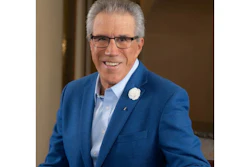
 Dr. Paul Homoly.
For straightforward cases, focusing on the chief complaint -- the broken filling, the missing tooth, the discolored incisor -- may be enough. But when patients need complex care, a single question only scratches the surface.
These patients often come to us not just with oral conditions but with emotional, lifestyle, and logistical challenges that influence their readiness for care.
That's where the Four Chiefs come in -- a framework that helps you connect beyond the clinical.
The Four Chiefs explained
- Chief condition: This is the intraoral problem that brings patients in -- the broken crown, the chipped front tooth, the missing molar.
- Chief disability: Behind the chief condition is the emotional consequence of that condition -- how it is affecting their life.
- Example: Helen has a chipped front tooth (condition). She's embarrassed at work (disability).
- Chief benefit: The emotional opposite of the disability, the benefit is the lifestyle improvement the patient wants.
- For Helen, the benefit is feeling confident when speaking at work.
- Chief fit issues: Fit issues are the practical realities that shape readiness -- the patient's budget, time, health, or family responsibilities. Patients may want the benefits of care, but if the timing doesn't fit their lives, treatment must wait.
Why this matters
Discovering the Four Chiefs only takes a few minutes, but the payoff is extraordinary. When dentists lead these conversations -- not team members -- it transforms the relationship from procedural to personal.
Patients feel understood, not sold to. They start to like and trust you faster. And when that happens, case acceptance follows naturally. The Four Chiefs aren't just diagnostic, they're diagnostic for connection.
From insight to implementation
Here's the challenge: Knowing this concept is one thing; teaching it across dozens, or hundreds, of providers is another.
That's why I developed Training at Scale Mastery, a system designed for dental service organizations to train teams consistently in the new patient experience and treatment acceptance.
And now, with the addition of the AI Accelerator Coaches, every clinician and team member can practice the Four Chiefs conversation anytime, building confidence, empathy, and influence through real-time feedback.
These aren't generic chatbots. They're trained on 30 years of my work in treatment acceptance and communication -- your 24/7 virtual coaches for mastering the conversations that matter most.
The takeaway
A chief complaint tells you what's wrong. The Four Chiefs tell you what's possible.
When your team understands the difference, patients don't just get treated, they get heard. And that's how practices grow trust, loyalty, and long-term success.
If it's time to elevate your organization's new patient experience and treatment acceptance, discover Training at Scale Mastery and meet your AI Accelerator Coaches. Because the first step to mastery is learning what your patients really mean.
Dr. Paul Homoly has developed speaker training and leadership programs for leading dental organizations, including Dentsply Sirona, Nobel Biocare, and Pacific Dental Services. He is the creator of the Treatment Acceptance Mastery™ curriculum and AI Accelerator Coaches™, the first AI-powered communication training tools built exclusively for dentistry. Learn more about his programs.
The comments and observations expressed herein do not necessarily reflect the opinions of DrBicuspid.com, nor should they be construed as an endorsement or admonishment of any particular idea, vendor, or organization.