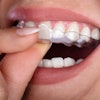
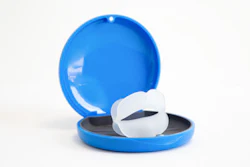
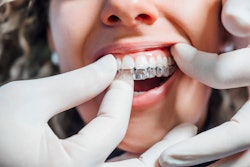
Children who have good relationships with their parents may comply more with clear aligner treatment, according to a study published in the American Journal of Orthodontics and Dentofacial Orthopedics.
Timely changing and cleaning their aligners were most associated with the parent-child relationship (PCR), the authors wrote.
“Pretreatment assessment of children’s and adolescents’ PCR can offer valuable prognostic insights for orthodontic treatment planning and personalized compliance management,” wrote the authors, led by Peilin Li of the West China Hospital of Stomatology at Sichuan University in China (Am J Orthod Dentofacial Orthop, March 18, 2026).
Successful clear aligner treatment in children and adolescents requires strict daily compliance. However, it remains a challenge.
To explore the correlation between the parent-child relationship and clear aligner compliance among those ages 6 to 18, parents completed questionnaires asking about the relationships with their kids, sociodemographic information, and orthodontic compliance. Spearman correlation coefficients and binary logistic regression were used to analyze the 124 questionnaires submitted, according to the study.
Greater closeness and lower conflict between parents and children showed a statistically notable but weak correlation with a higher mean compliance score (p <0.01).
Furthermore, patients who were closer to their parents and reported low conflict showed better clear aligner compliance, specifically when it came to cleaning them and changing them in a timely fashion (p <0.05). Finally, participants with great closeness to their parents were 2.2 times more likely to achieve better overall orthodontic compliance. However, those who experienced high conflict were only 0.3 times as likely as those living with low levels of conflict to comply with treatment, the authors wrote.
Nevertheless, the study had limitations, including the modest association between parent-child relationships and aligner compliance suggest that other factors, like the orthodontist-patient relationship, may play a role. Therefore, the relationship between children and parents should be considered as a complementary factor, not the sole determinant in predicting compliance with aligner treatment, they wrote.
In the future, multicenter, cross-regional studies with more diverse and representative samples should be conducted to better validate these results, the authors wrote.
“Despite these limitations, this study provides valuable preliminary insights into the relationship between PCR and CA (clear aligner) compliance among children and adolescents,” Li and co-authors wrote.