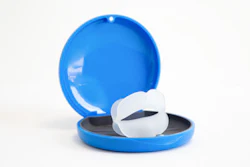
Wearing plastic orthodontic devices -- specifically clear aligners and retainers -- may release microplastics that possibly affect the immune system, according to a story published on April 2 by the University of Buffalo.
Microplastics don’t break down. They can persist inside macrophages, which are specialized immune cells that remove foreign debris and protect against infection and inflammation, possibly disrupting the body’s immune response, according to university researchers.
“Over time, this may trigger chronic inflammation, weaken the body’s ability to fight infection and interfere with proper wound healing,” Thikriat Al-Jewair, an associate professor in the university’s orthodontics department, said in the story.
For the past 20 years, scientists have alerted the public about microplastics, which invade water and food supplies and pose dangers to the environment and humans. While not enough is known about the harm it causes to the body, microplastic particles have been found in human tissues, including the lungs and liver. Some research has found associations between exposure to microplastics and gene damage and heart problems.
This study, published in the February 2026 issue of Progress in Orthodontics, is believed to be the first to capture live cell imaging of macrophages ingesting aligner-derived nanoplastics.
To study how plastics in orthodontic devices may affect human immunity, retainers, clear aligners, and sleep appliances for temporomandibular joint disorders manufactured by different companies were evaluated. Some of the devices were made via traditional thermoforming, while others were 3D printed, according to the story.
The devices were submerged in artificial saliva, incubated, and put through a vortex mixer daily for one week. Flow cytometry quantified particle release, which was imaged by scanning and transmission electron microscopy.
Thermoformed devices shed a smaller amount of microplastics than direct-printed polymer ones. However, both types of orthodontic devices shed measurable nanoplastic fragments that are readily internalized by macrophages, according to the story.