A clinical trial found that competitive swimmers who wear mouthguards combined with arginine-containing toothpaste experience significantly better protection against tooth sensitivity and erosion caused by chlorinated water than using a mouthguard alone while also improving their overall oral health quality of life.
- Chlorinated water exposure makes competitive swimmers highly susceptible to dental erosion and dentin hypersensitivity.
- Mouthguards alone reduce tooth sensitivity, but combining them with 8% arginine-containing toothpaste works significantly better.
- The combined therapy showed superior results in two weeks, with swimmers reporting better comfort, tightness, and satisfaction.
- The study included 40 competitive swimmers ages 13 to 25 who trained at least five hours weekly with erosion-related tooth sensitivity.
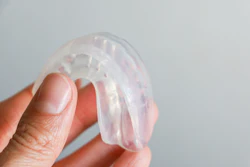
Wearing mouthguards reduced the dentin hypersensitivity of competitive swimmers, but combining their use with arginine-containing toothpaste may work even better, according to a study published recently in the International Dental Journal.
Additionally, the combination improved swimmers’ oral health-related quality of life (OHRQoL), the authors wrote.
“Both interventions effectively reduced dentin hypersensitivity; however, the combined therapy offers superior participant satisfaction during early treatment and greater improvements in OHRQoL,” wrote the lead author, Waranuch Pitiphat of Khon Kaen University in Thailand (Int Dent J, September 22, 2026, Vol. 76:6, 111179).
Being exposed often to chlorinated water makes competitive swimmers more susceptible to dental erosion and dentin hypersensitivity.
The study, a randomized, parallel-group, controlled clinical trial, sought to determine the efficacy of only wearing a mouthguard versus wearing one combined with brushing with arginine-containing toothpaste in reducing hypersensitivity and improving satisfaction and OHRQoL among swimmers.
For the trial, 40 people between the ages of 13 and 25 who swim at least five hours weekly with erosion-related hypersensitivity were randomized into mouthguard-only or combined therapy of mouthguard with 8% arginine-containing desensitizing toothpaste groups. Hypersensitivity and satisfaction were assessed at baseline, two, four, and eight weeks using a visual analog scale. At baseline and eight weeks, oral impacts on daily performances OHRQoL was evaluated, according to the study.
Those in both the mouthguard-only and the combined therapy groups showed significant hypersensitivity reduction at all follow-ups (p ≤ 0.001). However, the combined therapy group had better absolute sensitivity reduction, the authors wrote.
Although both groups reported high satisfaction throughout the study period, the combined therapy group reported the greatest outcomes at two weeks. This group reported significantly higher satisfaction in terms of appliance tightness (p = 0.01), comfort (p = 0.008), and hypersensitivity reduction (p = 0.01), they wrote.
In both groups, OHRQoL improved considerably (p < 0.001). However, the most improvement was seen in the combined therapy group (p = 0.04), the authors wrote.
Nevertheless, the authors acknowledged multiple limitations. During regular training, swimmers used their mouthguards on their own. Therefore, daily compliance could not be directly monitored, they wrote.
“While a mouthguard alone provides meaningful symptom relief, combining it with arginine-containing toothpaste yields superior OHRQoL and satisfaction, offering clinicians a practical, evidence-informed strategy for managing this population,” Pitiphat and colleagues wrote.