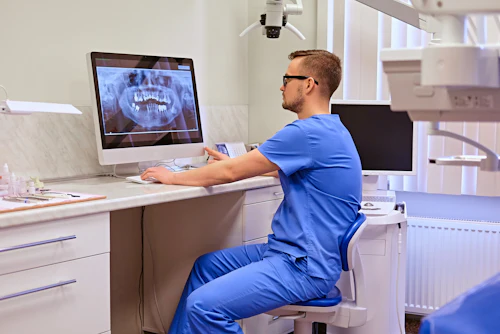
Artificial intelligence is the topic that dominates nearly every dental conference conversation these days. However, for many in the profession, the excitement is still tangled with uncertainty. What does AI actually do in a dental practice? Is it genuinely useful, or is it more promising than the actual product? And perhaps most urgently, should dental team members worry about their jobs?
Nathan James has some answers ... and they may surprise you.
As the chief product officer of PlanetDDS, the company behind practice management platforms Denticon and Cloud 9, James brings more than 20 years of industry-specific technology experience to one of dentistry's most pressing questions. He's only been in the dental space for a year, but he arrived with a clear-eyed perspective on where AI has been, where it is now, and where it's heading fast.
In this episode of The DrBicuspid.com Podcast, James joins me for a conversation that cuts through the noise and gets practical. James traces AI's evolution from simple rules-based engines to the large language models that power today's tools. He explains how the shift from generative AI to what he calls "agentic AI" is where things get genuinely transformative.
Rather than generating text or images, agentic AI can be given a direction and act on it autonomously -- filling schedules, confirming appointments, managing recalls, and even handling rescheduling without a human ever picking up the phone.
The real-world applications James describes are already live. Planet DDS recently launched AI Voice Perio, which allows clinicians to dictate periodontal charting in natural language -- pausing, self-correcting, even saying "undo" -- while AI interprets the intent and updates the chart in real time. Confirmation agents are already making proactive calls to patients on behalf of practices. A scheduling agent is next.
For dental assistants worried about being replaced, James offers a nuanced take: AI won't replace humans, he argues, but humans who use AI will replace those who don't.
Looking to 2030, James sees AI becoming the connective tissue that simplifies the complex ecosystem of payers, practice management systems, payment processors, and claims management, making revenue cycle management faster, smarter, and less burdensome for everyone involved.
It's an honest, optimistic, and genuinely informative conversation about a technology that's no longer coming -- it's already here.