Dental practice owners can choose between defined contribution plans like 401(k)s and defined benefit plans, each suited to different practice sizes, owner ages, and earnings levels. Defined contribution plans work best for practices with moderate earnings and younger employees, while defined benefit plans suit higher-earning practices where owners are significantly older than staff, potentially offering larger tax savings.
- Defined contribution plans (401(k)s and profit-sharing) are less complex and costly, best for practices with moderate earnings and younger team members.
- Defined benefit plans guarantee retirement benefits and suit high-earning practices, where owners are older than employees, allowing more funds to be allocated to owners.
- Annual contributions to defined contribution plans have government-set maximums, while defined benefit plans typically have no minimums or maximums.
- The right plan depends on practice earnings, owner age, team composition, and can result in thousands of dollars in tax savings over time.
Dental practices generally choose between two types of qualified employer-sponsored retirement plans: the defined contribution plan and the defined benefit plan. They differ in cost, complexity, and the kind of practice they favor. The right choice depends on the practice’s earnings, the owner’s age, and the makeup of the team.
Defined contribution plans
In a defined contribution plan, the deductible contribution from the employer is defined, hence the name. Many dentists are familiar with this type, which includes the 401(k) and the profit-sharing plan.
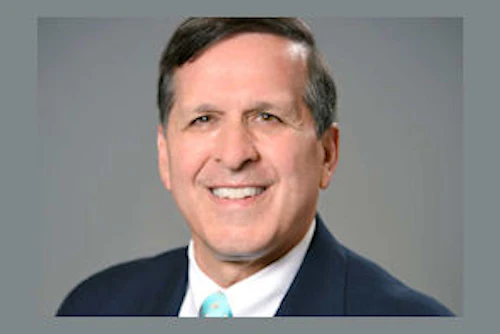
 Bruce Bryen, CPA, CVA.
The government sets a maximum amount the practice may contribute. Compared with a defined benefit plan, these plans are less complex and less costly to adopt and administer each year.
Whom it fits
- Practices with reasonable annual earnings, though not necessarily at the high end
- Participants, including the owner, who are mostly in their 20s, 30s, or early 40s
- Practices with almost any number of employees
How it works
- Employees can withhold part of their regular pay as voluntary contributions, up to a government-set maximum. Employees age 50 or older may withhold more under government guidelines.
- The practice, as plan sponsor, may also contribute for each participant based on the formula in the plan’s adoption agreement.
- Employee contributions plus the practice’s contributions cannot exceed a maximum defined amount.
- The benefit at normal retirement age is not guaranteed. It depends on the plan’s earnings and on whether the maximum was contributed each year.
Defined benefit plans
In a defined benefit plan, the benefit payable at normal retirement age is defined by the plan’s formula and then funded. These plans are much more expensive to design, adopt, and administer each year than defined contribution plans.
An actuary, or an attorney familiar with actuarial tables and assumptions, should prepare the design. The formula is built after discussions with the practice owner or owners based on historical and projected earnings.
Whom it fits
- Practices with earnings at the higher end, normally much higher than those suited to a defined contribution plan
- Owners who are older than the rank-and-file employees, with employees as much younger than the owner as possible
- Practices with as few participants as possible, which allows more to be allocated to the owner
Why those factors matter
The formula uses a normal retirement date, and that date can be chosen to help the owner receive a distribution as soon as legally possible. The concept is based on each participant’s age compared with the normal retirement age: The closer a participant is to that age, the sooner the participant receives a distribution.
How funding works
- The practice’s annual contribution is computed after determining the plan’s earnings or losses for the year, the balance in each participant’s account at year-end, and the projection needed to reach the defined benefit.
- Like the defined contribution plan, the defined benefit plan is sponsored by the practice. Unlike it, there are typically no minimums or maximums on the annual deductible contribution.
- The benefit at normal retirement age is guaranteed, and the practice, as sponsor, must make up any losses.
- Earnings and asset appreciation within the plan reduce the amount the practice needs to contribute.
Choosing the right plan
These summaries show what each plan offers and roughly how many employees a practice should have for the owner to get the maximum benefit he or she may be entitled to receive. There are other benefits and points to consider, and every practice owner should discuss them with the practice’s dental certified public accountant (CPA).
The CPA’s experience matters. If the practice does not have a dental CPA with deep experience in both dental practices and qualified retirement plans, it may be time for a change.
The tax savings over the years can amount to thousands of dollars, whichever type of plan the practice adopts. The right plan also supports a financially sound retirement for the dentist and his or her family, including children and possibly grandchildren.
The bottom line
Dentists who own their practices should meet with their dental CPA and follow the CPA’s advice in establishing the retirement plan that is right for their situation.
Bruce Bryen is a certified public accountant and certified valuation analyst with more than 45 years of experience. He specializes in providing litigation support services to dentists, with valuation and expert witness testimony in matrimonial and partnership dispute cases. Bryen assists dentists with financial decisions about their practice, practice sales, evaluating whether to join a dental service organization, practice valuation during divorce proceedings, and questions about the future or financial health of dental practices. He is part of Baratz & Associates PA in Marlton, NJ, and can be reached at [email protected].
The comments and observations expressed herein do not necessarily reflect the opinions of DrBicuspid.com, nor should they be construed as an endorsement or admonishment of any particular idea, vendor, or organization.