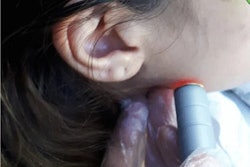
Conducting photobiomodulation therapy (PBMT) with a diode laser may speed up the recovery of soft tissue following local anesthesia in children, according to a study published recently in Scientific Reports.
Additionally, the therapy may be linked to reduced soft-tissue trauma and shorter recovery times in procedures involving both the upper and lower jaws, the authors wrote.
“PBMT using an 810-nm diode laser appears to be a safe, non invasive, and clinically useful adjunct for accelerating recovery of normal soft tissue sensation following local anaesthesia in paediatric dental patients,” wrote the lead author, Ayça Kurt, an associate professor in the department of paediatric dentistry at Recep Tayyip Erdogan University in Rize, Turkey (Sci Rep, July 13, 2026).
As a nonthermal and noninvasive strategy, PBMT stimulates biological responses at the cellular and tissue level, and it is known to have analgesic, anti-inflammatory, and regenerative effects. Also, this therapy has been linked to vasodilation and greater microcirculation, which may speed up the clearance of local anesthetics from soft tissues, according to the study.
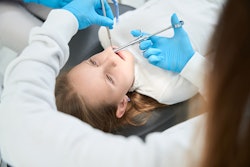
To explore the effectiveness of 810-mm diode laser PBMT, a randomized split-mouth clinical trial was conducted with 40 children between the ages of 4 and 9 who underwent infiltration anesthesia in both arches. Each patient underwent PBMT on one side and bogus irradiation on the other side 45 minutes after the application of local anesthesia, the authors wrote.
Recovery time was much shorter on the side that underwent PBMT than the side that received sham irradiation (p < 0.001). At 20 and 30 minutes, the rates of recovery were much higher when PBMT was used (p = 0.002 and p = 0.035, respectively), the study's authors wrote.
Furthermore, soft-tissue trauma occurrence was lower on the sides that underwent PBMT (p = 0.020). Comparable recovery trends were seen in procedures that were done in both the upper and lower jaws, the authors wrote.
However, the study was not without limitations. The sample size was smaller, and, therefore, subgroup analyses of dental arches should be interpreted with caution, they wrote.
“PBMT using an 810-nm diode laser appears to be a safe, non-invasive, and effective adjunct for reducing the duration of soft tissue local anaesthesia and associated trauma in paediatric dental patients,” Kurt and colleagues wrote.