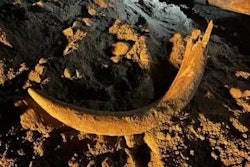
A New York homeowner discovered a complete mastodon jaw while doing yardwork in 2024, marking the first intact specimen found in the state in over a decade.
- A homeowner near Scotchtown, NY, found two large fossilized mastodon teeth while working in his yard in 2024, initially mistaking them for baseballs.
- The complete jaw is the first intact mastodon specimen recovered in New York in over a decade, along with a toe bone and rib fragment.
- Mastodons had rounded molar crowns designed for crushing branches and twigs, unlike mammoths with flat grinding plates.
- Museum officials plan to conduct radiocarbon dating and isotope testing to determine when the mastodon lived and reveal details about its diet and movements before public display in 2025.
A New York homeowner unearthed something unusual while doing yardwork: fossilized teeth belonging to a mastodon. An article published by Futura reported on the discovery.
The homeowner, who lives near Scotchtown, NY, was working in his yard in 2024 when he spotted two large round objects sticking up from the dirt. Initially, the man thought the objects were baseballs; however, when he pulled them from the ground, he realized that he was in fact holding giant fossilized teeth.
Soon, researchers from the New York State Museum, collaborating with faculty and students from the State University of New York (SUNY) Orange, recovered a complete jaw belonging to an American mastodon. It is the first intact jaw recovered in New York in over a decade. Teams also recovered a toe bone and a rib fragment.
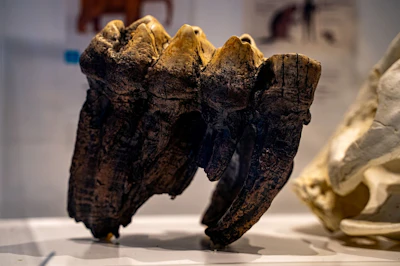
A distinct molar shape revealed that the fossil belonged to a mastodon
Unlike mammoths, which have flat grinding plates to grind grasses, mastodon molars have rounded crowns, which are ideal for crushing branches and twigs. “Mastodon” originates from two Greek words that translate to “nipple tooth,” which describe the tooth’s rounded crown shape.
Mammut americanum, a distant relative of modern elephants, once roamed North American forests during the Pleistocene epoch. Mastodons died out between 10,000 and 12,000 years ago, an extinction that researchers have attributed to climate shifts, changing forest habitats, and early human hunting.
New York: A rich source of mastodon fossils
Orange County, New York, is a hotspot of Ice Age fossils. There have been more than 150 reported mastodon fossil discoveries in New York, with approximately one-third from Orange County.
Long ago, moving ice sheets left deep carvings across the Hudson Valley, which created ponds and muddy wetlands as the glaciers retreated. As animals died in these wetlands, the thick mud trapped their remains, sealing off oxygen, which helped preserve the bones.
Next steps for the mastodon jaw
Museum officials at the time said they were cleaning the fossil and preparing it to undergo chemical analysis before unveiling it for public display in 2025.
Radiocarbon dating can help pinpoint when the mastodon lived, and testing isotopes in the mastodon’s enamel can offer clues about the animal’s diet, water sources, and its movements around Ice Age New York.