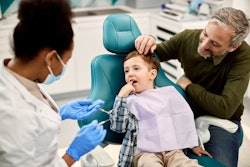
A clinical trial published in the Journal of Oral and Maxillofacial Surgery found that allowing patients to listen to music during wisdom tooth surgery effectively reduces anxiety as a nonpharmacological alternative, though medication like diazepam produces greater reductions in heart rate and blood pressure.
- Patients listening to music before wisdom tooth surgery had lower anxiety scores (33.6) compared to those taking diazepam (37.4) prior to the procedure.
- The study involved 30 healthy patients in a randomized trial at an Iranian dental school, with each patient undergoing two separate surgical sessions.
- While music reduced anxiety effectively, diazepam produced more pronounced reductions in physiological measures like heart rate and blood pressure.
- Music offers an inexpensive, accessible, and nonpharmacologic alternative for managing third molar surgery anxiety.
- Anxiety management during dental procedures is critical because preoperative anxiety causes extra stress and discomfort for patients undergoing third molar extraction.
Managing anxiety during wisdom tooth surgery may be as simple as allowing patients to select some music and listen to it. The study was published recently in the Journal of Oral and Maxillofacial Surgery.
Although music may be a nonpharmacological alternative for reducing anxiety, medication led to more pronounced reductions in physiological parameters, including blood pressure and heart rate, the authors wrote.
“Music may offer a nonpharmacologic option for perioperative anxiety management,” wrote the authors, led by Dr. Behnoosh Hormozi, MSc, at the University of Connecticut School of Dental Medicine (J Oral Maxillofac Surg, September 1, 2026, Vol. 84:9, pp. 1471-1479).
Why this matters
Preoperative anxiety, which can cause extra stress and discomfort, is not unusual for patients undergoing third molar surgery. Therefore, managing anxiety during dental procedures is critical.
To compare the effects of music and diazepam on anxiety, pain, and physiological parameters during and after surgical extraction of impacted third molars, an unblinded, randomized split-mouth crossover clinical trial was conducted at a dental school in Iran. The trial included 30 healthy patients. Each patient underwent two separate surgical sessions: one session with oral diazepam premedication and the other while listening to music.
Their anxiety levels were measured using the State-Trait Anxiety Inventory (STAI). Secondary outcomes were pain and physiologic measures, according to the study.
Before the procedure, the mean state anxiety (STAI-S) scores were 33.6 ± 5.98 for those who listened to music and 37.4 ± 4.81 for those who took diazepam (p < 0.001). Lower scores indicate that patients experience less anxiety. At 24 hours, the mean STAI-S scores were 38.36 ± 4.41 for those who played music and 36.23 ± 6.42 for patients who took diazepam (p = .04), the authors wrote.
In terms of physiological parameters, heart rate appeared to be much lower immediately before surgery for those patients who took diazepam compared to those who listened to music (95.47 ± 11.44 vs. 110.8 ± 8.71; p < .001). After suturing, heart rate was lower in the medication group versus the music group (103.20 ± 12.32 vs. 115.4 ± 10.74; p < .001), they wrote.
Additionally, blood pressure was lower in the diazepam patients immediately before surgery (110.93 ± 9.8 vs. 120.19 ± 7.2; p = .020) and showed a statistically significant difference after suturing (120.34 ± 6.8 vs. 120.35 ± 7.4; p = .044), the authors wrote.
However, the study had limitations, including that the research was completed at one center, which may limit generalizability, the authors wrote.
“Although diazepam resulted in more pronounced reductions in physiologic measures, music offers an inexpensive, accessible, and nonpharmacologic alternative for managing anxiety during third molar surgery,” Hormozi and colleagues wrote.