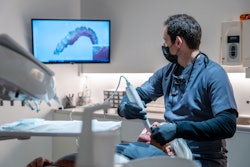
At the recent Dentsply Sirona World meeting in Las Vegas, Dr. Paul Homoly shared some of his valuable patient communication tips with DrBicuspid. He focused on one question that every dentist should ask his or her patients when the time is right and why that question is so important.
Watch Homoly below.
Video transcript
"We're at Dentsply Sirona World, and I'm surrounded with technology. All of the amazing new technology. Dentistry has come 100 years in the last, oh, easily five years. Technology has made ... it's made the experience for dentists. It's made so many dentists safe beginners. Now, dentists who have been out of practice for, you know, half a dozen years are doing beautiful cases, but really what hasn't changed is the experience of the patient.
"Patients back then and now really want the same thing. They want to feel well cared for. They want to feel understood. And considering that most of the attendees at this conference are interested in doing more sophisticated, high-end dentistry, you'll find that most of these complex care patients have chronic conditions. They've had them for years, and now they show up at the dental office and they say, 'OK, I'm interested in having my missing teeth replaced,' and the teeth have been missing for 15 years.
"And so the tip, my clinical tip, that I'd like to give you today is one of the most important questions you can ask these complex care patients who have long-term chronic conditions.
"After you've developed a rapport with them through a new patient interview, where you get to know them and they get to know you, near the end of this new patient interview, I want you to ask this question. It's called the 'why now?' question, and it kind of sounds like this:
"'Well, Jonathan, it's been a while since you've been to the dentist. I'm looking at your record. It's been five years, and I know replacing your missing teeth has been important to you, but what's going on now that makes this important? Why now, Jonathan?'
"You see, a question like that will surprise a patient, and oftentimes they'll relate to you a time and a place where it became important. 'Well, I was working with a client, and so many of my business meals, business is done over meals, and I'm becoming embarrassed about it, and I just want to be ... I just want to be more confident with my clients.' You see, you're not going to get that information from a medical history, but you will get it from a 'why now?' question.
"So the clinical tip -- the big reveal here -- is understand why your patients want complex care dentistry, and it really starts with asking the 'why now?' question. What's going on now that makes it important? When you learn that, that's when you'll discover their behavioral benefit, and that's what causes patients, that's what influences patients to say yes."