The Brush& method is a simple dental home care approach that builds sustainable habits by starting with brushing and progressively adding one habit at a time -- flossing, then Waterpik --customized to each patient's needs and barriers rather than forcing a one-size-fits-all routine.
- The Brush& concept: Start with brushing twice daily (emphasizing nighttime), then add flossing, then add a Waterpik -- one step at a time based on patient readiness.
- Habit-stacking psychology: Attaching new habits to existing routines, like brushing, makes them easier to adopt and maintain than introducing multiple changes at once.
- Remove barriers first: Identify what prevents patients from following through (thick floss, messy Waterpik, no counter space) and offer practical alternatives like handheld models or easier floss types.
- Proven results: Patients develop healthier gums, maintain better home care, often become cavity-free, and report easier recare visits when using the Brush& approach.
As dentists, we spend a lot of time educating patients about the importance of brushing, flossing, and maintaining consistent home care. We explain what they should be doing, give them supporting scientific reasons, demonstrate the proper techniques, and send them home with good intentions. And then we discover at the next recare visit that the recommendations didn’t quite become a habit. So the cycle starts again, and we go over the whole protocol.
Over time, I’ve learned that this cycle doesn’t work. Something had to change, so more than 10 years ago, I started with a different mindset and a different way of teaching. I can confidently say it’s working.
It’s a simple approach that has worked well for my patients. I call it Brush&, and the idea is exactly what it sounds like: Brush and add one more thing. I always joke that I should trademark it.
I’ve seen patients develop healthier gums, maintain better home care and, in many cases, become cavity-free. Their recare visits are often easier, and patients themselves notice the difference. When I ask patients about their healthier gums, I often hear the answer I love most: “I’m doing the Brush&!” Patients are confirming they have a home care habit that has been easy to implement and follow.
I’ve also had hygienists who have worked in multiple practices comment on how healthy our patients’ gums are and how well our patients maintain their home care.
The concept is simple, so we have to teach it with lightness and a “You got this,” kind of conversation. Keep it light, keep it encouraging, and make it easy enough for the patient to follow through.
Start where the patient is
 Dr. Elsie Joel-Morse.
When I talk to patients about home care, I start by saying, “Tell me what you’re doing now.” It’s a simple form of motivational interviewing. The patient tells me where they are, and we decide on the next step together. I want them to leave feeling confident that they can do something differently enough to make a difference.
If a patient isn’t brushing consistently, that’s where we begin. If they’re already brushing morning and night, we can build on that. If they’re brushing and flossing well, we can introduce the next step.
I introduce patients to all three things I recommend (brushing, flossing, and a Waterpik) so they know the full protocol from the start, but I tailor how they implement it, breaking it down into small, easy steps.
Brush (morning and night)
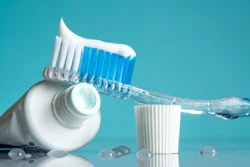
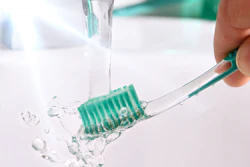
Brushing twice a day is our starting point. I especially emphasize nighttime brushing because it’s the one I don’t want patients skipping.
I prefer a Sonicare electric toothbrush, so if a patient is using a manual toothbrush consistently, I introduce the Sonicare as an improvement to consider. But if a patient is struggling to brush at all, I don’t start by making the toothbrush the issue. First, let’s establish the habit.
Once brushing is established, we can add another step. That’s where Brush& comes in.
Brush&: Floss and Waterpik
Flossing is a natural next step because it addresses the areas a toothbrush cannot adequately clean on its own.
I particularly emphasize flossing for patients who have interproximal cavities. When I see decay developing between teeth, I want them to understand why cleaning those areas matters and why flossing deserves special attention.
I have a floss preference, too. I tend to favor textured floss over floss that glides. The specific product that I recommend is Tom’s Flat Floss. If contacts are too tight and this would keep the patient from flossing, I recommend starting with an easier textured floss like Reach Floss. The best first floss is one the patient wants to use and can use comfortably and consistently.
I also introduce the Waterpik, often at the same time as flossing, because I encourage patients to alternate between the two. One night, they can Brush& floss. The next night, they can Brush& Waterpik.
I explain that flossing and a Waterpik serve different purposes. While flossing is “brushing between the teeth,” a Waterpik power-washes the valley between the teeth and gums. Both are important, but they do two very different things.
To help patients understand the different roles of flossing and a Waterpik, I use a visual aid. I point to my wedding ring and bring my two fists together so the ring is no longer visible. I explain that the space between my fists represents the area between two teeth, where bacteria and plaque hang out. When we floss, we are cleaning “the ring,” the area a toothbrush can’t reach.
But what about the valleys that surround every tooth? I point to my long sleeve, which serves as the gums. That is where the Waterpik comes in. We want to blast away the bacteria that research has linked to heart disease, dementia, and other conditions.
Make it easy for them
This is probably the most important part of the entire protocol: Finding the barrier and offering the “&.”
If brushing twice daily is a problem, start by recommending only nighttime brushing. Most patients will brush in the morning anyway because they don’t like morning breath.
If flossing all their teeth is overwhelming, start with just the front teeth, or floss the upper teeth one night and the lower teeth the next. Breaking it down even more helps them get started.
If a patient tells me that the floss I recommended is too thick, we start with an easier one. If the Waterpik feels too messy, I suggest putting a handheld model in the shower and using it there. If there’s no counter space in the bathroom, a handheld model may be a better option than a countertop unit.
We need to make it possible in their minds.
To make it even easier, I keep the products I recommend available in the office. I obtain them through manufacturers or purchase them when they’re available at a good price, so patients can pick them up without having to make another trip or figure out where to buy them. If I don’t have what they need, I text them a link while they are sitting in the chair. This immediate access is exactly what patients want.
This little bit of hand-holding in the office has made a big difference. It turns a recommendation that sounds good in the chair into a habit, or at least the start of one.
The psychology behind Brush&
I believe one of the most important things we can do as dental professionals is remove the shame from conversations about home care. Patients already know they are supposed to brush and floss. Repeating the instructions, adding more products, or making them feel guilty doesn’t necessarily help them follow through.
Instead, I try to keep the energy light and encouraging, with a “You got this,” spirit while building one habit on top of another. Behavior experts call this habit stacking: attaching a new habit to one that’s already part of someone’s day. Brushing is the habit most patients already have, so it’s the perfect anchor for the next one.
Brush& is flexible, easy, and attainable because it is custom-tailored. The point is not to force every patient into the same routine; it’s to help each person take the next reasonable step.
So I encourage you to start where the patient is. Keep the conversation light. Encourage progress. Introduce the tools, but tailor the routine. Understand their barriers first, then help them remove them.
And when a patient is ready, ask them to add just one more thing to their nighttime routine.
Dr. Elsie Joel-Morse has practiced dentistry since earning her degree from the University of Maryland Dental School in 2003. She is the owner of EJM Dental Studio. A Platinum+ Invisalign Provider with advanced CEREC training, she has been recognized by Baltimore Magazine as one of its top dentists. Joel-Morse provides modern, compassionate care that puts apprehensive patients at ease.
The comments and observations expressed herein do not necessarily reflect the opinions of DrBicuspid.com, nor should they be construed as an endorsement or admonishment of any particular idea, vendor, or organization.