Dr. Mischa Krebs practices in a German town of 18,000 people, where his grandfather was treating patients in 1952 and a 94-year-old man still remembers holding his father as a baby. Three generations of dentistry in one family, one community, one practice, with now, possibly, a fourth on the way.
DrBicuspid.com Editor-in-Chief Kevin Henry sat down with Dr. Krebs on June 27, 2026, at the Dentsply Sirona Implant Solutions World Summit in Gothenburg, Sweden. The conversation covered team training, the technology transition Krebs navigated alongside his father, and why longevity -- in restorations, in relationships, and reputation -- is the standard by which he evaluates everything else.
Kevin Henry: I work closely with dental assistants back in the U.S. How do you work with your team on technology and ensure that everyone is as up to speed as you are?
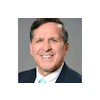
 Dr. Mischa Krebs.All images courtesy of Dentsply Sirona.
Dr. Mischa Krebs: We have to educate our team, and I see that very clearly when I think about discussions with my father. Take a night guard, for example. We do an intraoral scan in the goal position, take a bite scan, and it goes to manufacturing. The good thing is there is nothing to grind in at the end -- it fits perfectly.
My father will say it was so much easier in his day. He told an assistant to take an impression and that was the end of his involvement.
It's the same for me. I ask an assistant to take the intraoral scan, I step in for the bite scan, and we are done. The role has shifted, but the principle is the same: As we dentists learn new steps, so do our assistants.
In the past, they took a conventional panoramic x-ray. Today, they operate the cone-beam computed tomography system, and they come to me afterward to ask whether the alignment was correct. I give feedback, they learn, and they improve. It works well.
Working with dental technicians has also improved enormously. In the past, we sent an impression and a cast with some marks on it. Today, we send a digital scan through a platform like DEXIS -- the technician can see the gingival margins, the tooth positions, even the coloration to some degree. There is so much more information moving back and forth, and I think that directly improves our results.
You mentioned your son could become a fourth-generation dentist and eventually take over your practice. What was it like for you transitioning a family business into the future? Was technology a challenge, or did everyone embrace it?
 Dr. Mischa Krebs told Kevin Henry that the family practice was always managed as a going concern. "It was always clear that we would keep investing, keep developing, and see where it leads," Krebs said.
I was fortunate. When I joined my father’s practice, he said something I have always appreciated: "You have been through an education I did not have, so go your way and modernize what needs to be modernized."
He was already quite current. He always attended congresses and was active in dental politics, including the FDI World Dental Congress for Germany, but he recognized that I was a step ahead, and he gave me the room to act on it.
The transition was gradual. I started with what he had, but it was almost immediately the moment when zirconia arrived. About six months in, I went to the dental laboratory he worked with and told them directly: "If we want to continue working together, you need a scanner, a milling machine, and we need to start working with this material." I believed it would take us further.
They responded well. They appreciated working with someone who was curious about the future, and they invested. We still work with that laboratory today. It is now the founder’s son running it, so I am working with the next generation there as well.
I think the transition was smooth partly because my father always knew someone was coming behind him. Some dentists think, "I will stop, I will sell, and whatever comes next is not my concern." In our practice, it was always clear that we would keep investing, keep developing, and see where it leads.
You mentioned the town where you practice and your reputation within it. How important is that to the way you work?
We have 18,000 inhabitants. When I give lectures and present cases, I can often tell you exactly who the patients are, because I know them or know who they are connected to.
One patient’s husband is the driving instructor for my sons. His father was my driving instructor. His grandfather was the driving instructor for my father and my grandmother. The next patient is the wife of a former teacher of mine. In a town of 18,000, you do not know everyone, but you know quite a lot of people, and you have a reputation.
When my son said he wanted to study dentistry, I told him he had to spend two weeks with me in the practice first. He had an idea what I did, but he did not really know my daily work.
During one of those days, a patient came in -- 94 years old, first treated by my grandfather. He knew the exact year he become a patient, 1952, because that was the year he joined a sports club where my grandfather was also a member. They were young men together. He then said to my son, "I had your father on my knees as a baby, and before that, I had your grandfather on my knees as a child."
That is four generations in one conversation. And that is why, for us, longevity in what we do is not an abstract goal. It is personal.
In my lecture two days ago, I opened with a prosthetic reconstruction my grandfather placed in 1962. I photographed it in 2007 and it was still intact -- 45 years in function. That is the standard I think we should all aim for. A beautiful result on Day 1 matters. A beautiful result 20 years later is what we are really after.
Reputation clearly matters, but the team plays a role in that reputation too. How do you ensure your team understands the value of what they are part of and what it means to the community?
 When you involve your team on your practice's journey, Krebs said, they repay that investment by bringing in new patients.
It has to come from both sides. We have a dental assistant who trained under my grandfather and was still working in the practice when I joined. Three of my senior assistants -- the people who effectively lead the others -- started their careers under my father. I knew them as a child because I was always in the office at some point when they were there.
I think if you genuinely value your team members and take them with you on the journey -- not just assign them tasks, but bring them along as the practice evolves -- they give that value back.
What we see is that they bring patients. Their friends, their neighbors, their colleagues come to us, because they see that what we do works, that it holds up over time, and that people are happy with it for decades.
There are always people who come and go. That is the nature of any team. But we have a core that has been with us for more than 20 years, and I think that is what makes the difference.