Bread-and-butter restorative dentistry, for the most part, involves two things: fillings and crowns.
There are about 75 composite fillings on the market today, all of which tout themselves as the best. Imagine, the chemical engineers in each of these various dental restorative companies concocting newer and more sophisticated ways to make their composites as superior as possible. Much of the same can be said of scanners, burs, cements, crown materials, isolation techniques, etc.
 Dr. Ankur Gupta.
But there is one sadly ignored but highly relevant player in the bread-and-butter dental restorative toolbox. This is something that every dental office has and uses constantly. It is something that is rarely marketed and, as such, rarely is given much thought. That thing is temporary material.
When I graduated from dental school in the early 2000s, the temporary material that we were taught to use was acrylic, made of methyl methacrylate monomer (the liquid), and polymer powder. The dental lab at the University of Michigan, where I went to school, smelled like a nail salon, where all of us fledgling young dentists tried our best to figure out the best ratio of powder to liquid that would allow for our temporaries (which were, at the time, necessary to pass the board exam) to have the highest strength, shine, anatomy, and ability to resist fracture.
And then I graduated and over the last 25 years have used powder liquid acrylic for my temporaries less than 10 times.
Enter multifunctional methacrylate, which is made of bis-acryl resin, along with inorganic fillers. These materials eliminated the need for powder and made the temporary crown-making process unmistakably more convenient and predictable.
For most of us, the story stops there. Yes, it was a little sticky. Yes, it broke easier, especially in areas that were thin. Yes, it had BPA, which made certain patients uncomfortable. But it was easy, the crowns looked good, and they were easy to make.
This would probably have been the end of the story for me as well. Fortunately, since I am a product evaluator for Catapult Education, I get exposure to some of the newest and most innovative solutions in dentistry, whether they be products, software platforms, disposables, etc.
One company that has submitted products for evaluation several times over the past many years has been Kettenbach, a well-established Germany-based manufacturer of dental materials. I had used their VPS impression materials for years and always loved how high quality and inexpensive their stuff was.
They recently introduced a restorative product line called “Visalys,” and it included crown cement, composite restorative materials, bulk fill and build-up materials, and, relevant to this story, temporary material.
When I first saw their Visalys temporary material showcased at a dental conference (at the Greater New York Dental meeting), I saw what I am used to seeing at every booth at every conference: beautiful, high-quality-looking dentistry. In this case, they were showing a bridge from teeth #s 6-11 made of their Visalys temporary material over prepped teeth.
In my clinical experience, splinted temporaries carry with them a higher chance of fracture because of how thin the material must be at the junction between teeth. Often, especially with anterior cases, aesthetics and durability of the temporary material are in conflict with one another, as we try our best to make it look like the teeth are separate, but in doing so, make the interproximal junction more and more thin.

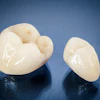
 Figures 1 and 2: Reconstruction cases like these, especially for patients who have exhibited a lifetime of heavy bruxism, require an extremely strong temporary material, not only because of the long span but also because of the potential for prolonged wear of the provisional dentistry.
The Kettenbach salesperson at that booth asked me to pick up the temporary and try to break it in half. Now, if you know me or have ever seen me lecture, you would know that I am not a big, strong guy, but in my head at that moment, there was no doubt that I would be able to break that temporary splinted bridge in half. I had been a dentist for nearly two decades at that point and had much experience with broken temporary material. I thought it would be so easy to snap the six-unit bridge into two pieces.
Well, I couldn’t, and I was impressed. Visalys temp is a multifunctional, BPA-free acrylic composite. It is still a bis-acryl material, but it has somehow been formulated to exhibit much higher fracture resistance and polish ability. I wanted to use it in my own office, but at the time, the only way to utilize Visalys temp was with a 10-to-1 ratio cartridge that required a special extrusion gun. I was so impressed with the material that our office took the plunge and bought the guns and cartridges for each operatory. While this was worth it for us, it was certainly disruptive.
Recently, Kettenbach has introduced a 1-to-1 Visalys temp formulation. This means that dentists can still enjoy the upgraded features of the material but without having to purchase special guns and mixing tips. This would be an excellent opportunity for dentists who want to benefit from the excellent physical properties of the material but do not want the disruption and investment that comes with new 10-to-1 guns and mixing tips.
The Visalys Temp One:One material was introduced to 15 dentists, all product evaluators for Catapult education. They were asked to evaluate the product in terms of its handling, durability, polish, shade match, setting time, along with other relevant criteria.


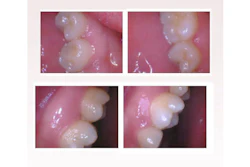
 Figures 3 and 4: Not only does the material exhibit uniquely high strength and resistance to fracture, its polishability is incredible, especially when using abrasive finishing disks.
Dr. Ankur A. Gupta graduated from the University of Michigan School of Dentistry. After completing a one-year general practice residency in Cleveland, he and his partner, Dr. Nisha Gupta, started North Ridgeville Family Dentistry in Ohio. Gupta is a member of the ADA, the Greater Cleveland Dental Society, the Ohio Dental Association, the ADA Success Speaker Corp, and he is a board member and speaker for Catapult Education’s Speaker Bureau. Gupta is an Academy of General Dentistry Program Approval for Continuing Education-certified provider.
The comments and observations expressed herein do not necessarily reflect the opinions of DrBicuspid.com, nor should they be construed as an endorsement or admonishment of any particular idea, vendor, or organization.