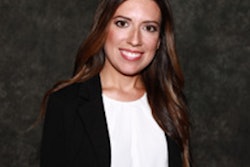
California dentist Dr. Marie Alejandrino-Buell's decision to attempt an unconventional treatment for a Mixtec fieldworker named Maria, rather than extracting her teeth, not only saved her smile but transformed her entire life, allowing her to transition from agricultural work to store management and demonstrating the profound impact of compassionate dental care on underserved communities.
- Alejandrino-Buell, a Filipino-American dentist, immigrated to the U.S. in 1994 with just $400 and built a practice serving vulnerable Mixtec communities in coastal California.
- Maria, a patient in her early 30s who appeared 50 due to years of fieldwork, faced tooth extraction but asked the dentist to help save her teeth.
- Dr. Buell used laser-assisted gum therapy and Fastbraces brackets to stabilize and straighten Maria's teeth without extraction, a risky but successful approach.
- After treatment, Maria's life transformed dramatically. She left fieldwork and now manages a store, demonstrating how dental care can open new opportunities.
- The dentist's commitment to underserved populations stems from her own immigrant struggle and her grandmother's legacy of education and service to others.
I'm just an ordinary dentist. I practice in a small farming town on the coast of California. Growing up, I never thought I'd find myself here.
But if you ask me why I do what I do, I'll tell you about a patient. For her privacy, I'll call her Maria.
A long way from Antipolo
I grew up in the mountains of Antipolo, a little city on the hills outside Manila in the Philippines. My parents came from fairly well-to-do families, but we never really had any money growing up. They never needed to make money, so they never learned to make or manage it.
Fortunately for me, my grandmother had foresight. The one legacy she made sure all her grandchildren had was education. If any of her 50 or so grandchildren needed money for school, she made it available.
 Dr. Marie Alejandrino Buell.
It was because of her that I became a dentist. She supported and encouraged me in my choice of career, and I will be eternally grateful.
She also encouraged me to move to the U.S. so I could build a life in which I could choose my own destiny. I came in 1994 with $400 in my pocket, a heart full of dreams, and a belief that I was brought to this place for a reason.
I was already a licensed practicing dentist in the Philippines, but in the U.S. I started as a dental assistant and worked my way up through every role in the office. It was very difficult because I had never done the tasks being asked of me. But I kept my eye on the prize. I knew that if I worked hard and studied hard, things would change, as long as I persisted.
It was this persistence and the belief that things can only get better that gave me the confidence and fuel to succeed. It was also this shared experience of struggling from nothing that gave me the compassion and determination to care for the families and children of the Mixteco population in my community.
The families who work the fields
The Mixtec (or Mixteco) people in Oxnard are Indigenous Mexican migrants, primarily from the rural Mixteca region of Oaxaca, Guerrero, and Puebla. They speak an Indigenous language that is not widely understood. While they are from Mexico, many do not speak Spanish. They are the backbone of the agricultural community on the coast of California, and they live with their families in shared housing in camps for field-workers.
I fell into caring for them quite by accident. Some patients worked in the county offices and asked me to help care for kids with disabilities. At first, I did this work pro bono. They encouraged me to become a Medi-Cal provider so my costs could at least be covered.
Soon after, I was asked to serve as a dental adviser on the Ventura County Oral Health Advisory Committee and then for the Ventura County Community Health Improvement Collaborative. Then came the chance to become a Champion Provider Fellow through a program run by the University of California, San Francisco. Through it, I worked closely with the Mixteco Indigena Community Organizing Project, and that's how I met wonderful people whose only desire is a better life for themselves and their families.
Growing up, my mom and my grandmother instilled in me a sense of responsibility to always look for opportunities to help others. My grandmother became a Franciscan tertiary nun after my grandfather died of a heart attack in his early 50s. He left her to raise 10 children by herself. She was only 40. Her choice to serve God by serving the least of her brethren was the example I had hoped to emulate.
Maria
I had pivoted my practice toward more orthodontic procedures and was taking classes to improve my skills. Because of my involvement with this community, I began seeing adults in their early 30s with teeth that would make most dentists pause. They had so much need: decay, gum disease, and teeth out of position.
One of these patients stands out. Maria was in her early 30s when she came to me, but she looked at least 50. The years of toiling under the sun had taken their toll.
When she opened her mouth, I could have easily told her something she had already heard several times: that I needed to remove all of her upper teeth and that she would need dentures.
That's when she burst out crying. She asked me to please help her save her teeth. She said she was only in her 30s and could not lose them.
Amid all the tears, I agreed to try. I fully disclosed that she could still lose her front teeth during this process. We talked about how, at this point, she had nothing to lose but everything to gain.
I fixed her cavities, did laser-assisted gum therapy without surgery, and selectively placed Fastbraces brackets to slowly guide the wayward teeth into position. My thinking was that without the brackets, I would have to tie these teeth together to hold them in place. With my experience with Fastbraces, I believed we could stimulate enough bone growth to stabilize her teeth and buy her the time she so desperately wanted.
Lo and behold, my theory worked. Eventually we were able to place brackets on all her teeth and straighten them. We stabilized her gums and got her healthy. I did not pull her front teeth back any further for fear of losing the bone we had regained. Needless to say, Maria was ecstatic.
The tray of fruit
When we removed her brackets, she burst out crying again. This time it was a good cry! We secured her teeth with a permanent fixed retainer.
 Maria before (July 2017) and after (March 2018) treatment.Dr. Marie Alejandrino Buell.
A few months later, a gorgeous woman in her 30s was sitting proudly in my reception area. She brought me a tray of fruit. It was Maria. She came back to tell me how I had changed her life. She no longer works in the fields. She now manages a store.
Why I keep saying yes
To us, Maria is just a case. To her, a new smile opened up a new possibility for her life, one that would never have happened if I had not said yes and taken a chance. I am truly grateful for what dentistry has given my family and me. It has been a very rewarding profession. It is people like Maria who have made me keep doing what I do.
Dr. Marie ECS Alejandrino-Buell owns and leads Dental Designs, a wellness dental practice in Oxnard, CA. In 2025, she led the first all-women dentist medical mission to Vietnam with Mommy Dentists in Business and Operation Smile International. Alejandrino-Buell is the 2022 recipient of the Leo Tauber, MD and David Fainer, MD Award for Oral Health Professional of the Year and has served on California Dental Association committees and councils.
The comments and observations expressed herein do not necessarily reflect the opinions of DrBicuspid.com, nor should they be construed as an endorsement or admonishment of any particular idea, vendor, or organization.