As people live longer, now averaging 79 in the U.S., teeth must function for 75 years or more, requiring a shift from traditional dental care to long-term preservation strategies that prioritize keeping natural teeth healthy through minimally invasive treatment and preventive maintenance rather than repeated restorations.
- Modern dentistry has dramatically reduced complete tooth loss in older adults, with those 65+ now retaining an average of 21 natural teeth compared to previous generations who expected tooth loss as inevitable.
- Teeth face cumulative biological, chemical, and mechanical stresses over decades -- from 1,000+ annual meals to acidic beverages, grinding, and temperature changes -- that compound over time rather than causing sudden failure.
- The restorative cycle means each dental intervention removes tooth structure, so preserving healthy structure at ages 30 to 50 preserves treatment options at ages 70 to 90.
- Keeping natural teeth longer requires increased maintenance, including periodontal care, fluoride therapy, xerostomia management, and protection from destructive forces, ot less dental care.
We are living longer than ever, and some of us need replacement parts, including hips and knees. But there is one part of the body that often gets overlooked when we talk about longevity: our teeth.
The first permanent molar usually erupts around age 6. If a patient lives into their 80s or 90s, we may be asking that same tooth to function for 75 years or longer. That’s a lot to ask of a tooth.
In 1900, life expectancy in the U.S. was about 47 years, which, coincidentally, is how old I am. By 1950, it had risen to about 68. Today, it is about 79. A patient who reaches 65 can expect, on average, almost another 20 years of life.
Meanwhile, dentistry has gotten much better at helping patients keep their natural teeth. Complete tooth loss among older adults has declined substantially over the past several decades, and adults 65 and older now retain, on average, about 21 natural teeth. That is dental success. But it has also created new challenges: How do we help those teeth survive for several more decades?
Think about what we ask our teeth to do
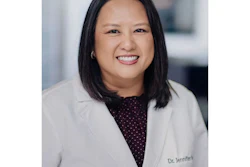
 Dr. Jennifer You.
Even if someone eats only three meals a day, that is more than 1,000 meals every year. Multiply that by 70 or 80 years ... and that does not include snacks, coffee sipped over a morning, an afternoon soda, chewing gum, sports drinks, or the many other exposures our teeth experience daily.
Every meal requires repetitive chewing forces. Cusps flex. Restorations are loaded. Enamel wears. Existing cracks can propagate. Teeth contact one another thousands of times over our lives.
At the same time, the oral environment is continually changing. We introduce carbohydrates. Oral bacteria metabolize them. The pH drops. Saliva works to buffer the environment and promote remineralization. Then we eat again and start the process over.
Teeth also experience repeated changes in temperature from hot coffee, cold water, and everything in between.
By themselves, these events do not necessarily cause a tooth to fail, but the factors are cumulative. Dental breakdown is often the result not of one dramatic event but of biological, chemical, and mechanical stresses on a tooth over many decades.
The modern diet is another challenge
We tend to focus heavily on the amount of sugar our patients consume, but frequency matters as much, if not more.
Eating a piece of cake with dinner creates a very different oral environment than sipping a sweetened coffee for three hours or grazing on crackers throughout the afternoon. Every exposure gives cariogenic bacteria another opportunity to produce acid.
Modern diets also expose teeth to a wide variety of acidic beverages. Carbonated drinks, sports drinks, energy drinks, flavored waters, and even some supposedly “healthy” beverages can contribute to erosive tooth wear when consumed frequently.
Then there are patients with gastric reflux, sometimes without the classic symptoms of heartburn, whose teeth are exposed to acid from another source entirely. But acid is only part of the equation. Mechanical stresses from clenching, grinding, chewing, and other parafunctional habits contribute to wear, fractures, and cracked teeth. Biological stresses continue as well: caries, periodontal disease, and recurrent decay around existing restorations.
As patients age, additional factors enter the picture.
Gingival recession can expose root surfaces that are more susceptible to decay. Dexterity may decline, and medical conditions and medications may contribute to xerostomia, or dry mouth.
Saliva is one of the mouth’s most important protective mechanisms. It helps clear food, buffer acids, and support remineralization. When salivary flow decreases, the oral environment can change dramatically.
This is why simply being “cavity-free” does not necessarily mean a dentition is free from risk.
Then there is the restorative cycle
Many of the teeth I treat in older adults did not arrive at age 70 completely virginal. A newly erupted tooth may have received a small restoration. Years later, that restoration may have failed or developed recurrent decay and been replaced with something larger. Eventually, a cusp may fracture or a crack may develop. The next restoration might be an onlay or a crown. The tooth may later require endodontic treatment or another replacement restoration.
The progression is certainly not inevitable, but every dentist has seen some version of it. It illustrates an important reality: Every time we intervene, what we do matters for the future of that tooth.
Restorations do not last forever either. A restoration that performs soundly for 15 to 20 years may still need to be repaired or replaced eventually, and each replacement usually requires removing additional tooth structure.
This is one reason I believe in preserving healthy tooth structure whenever possible. The more tooth structure we preserve at 30, 40, and 50, the more options we leave that patient at 70, 80, and 90.
Sometimes that means doing less. But minimally invasive dentistry does not simply mean waiting. There are also times when delaying treatment allows a crack to propagate, decay to grow, or a structurally compromised tooth to deteriorate further.
The goal should not be doing the least dentistry possible today regardless of the consequences. The goal should be doing the least dentistry necessary to maximize the lifetime of the tooth.
Keeping teeth longer may require more maintenance
Patients sometimes assume that because dentistry has improved, they should need less dental care as they get older. In some ways, the opposite may be true.
Previous generations often lost compromised teeth. Today, we are much more likely to try to maintain them. That may require periodontal maintenance, fluoride therapy, management of xerostomia, repair or replacement of old restorations, treatment of cracked teeth, endodontic therapy, or protection from destructive occlusal forces.
It’s not about doing more dentistry on aging patients. It’s about recognizing that a 75-year-old patient with 25 natural teeth has a very different dental objective from that of previous generations, who may have expected tooth loss to be an inevitable part of aging.
Today, many patients expect their natural teeth to last as long as they do, and I do too. I often tell my patients, “I want your teeth to outlive you.” Our job is to help make that possible.
That means we are not simply treating today’s cavity or today’s broken filling. We are managing dentition over a lifetime. Perhaps that requires us to ask a slightly different question when planning treatment. Instead of asking, “What does this tooth need today?” we should also be asking, “What treatment gives this tooth the best chance of still being functional 20 or 30 years from now?”
Our patients are living longer. Maybe our treatment plans need to start thinking just as far ahead.
Dr. Jennifer You is a general dentist with more than 20 years of clinical experience and owner of Lumos Dental in New Haven, CT. She graduated from the University of Alabama at Birmingham School of Dentistry and completed her general practice residency at St. Francis Hospital in Hartford. You embraces evolving techniques and technologies while believing that exceptional dentistry is built on personal connection, trust, and lasting relationships with her patients. She can be reached at [email protected].
The comments and observations expressed herein do not necessarily reflect the opinions of DrBicuspid.com, nor should they be construed as an endorsement or admonishment of any particular idea, vendor, or organization.