Adult orthodontic demand didn't grow because dentistry got better at selling it. It grew because the experience improved.
Dr. Scott Law, founder and chief clinical officer of Smile Doctors -- the nation's largest ortho-focused support organization, now operating around 600 locations -- makes that point early in this episode of The DrBicuspid.com podcast and builds on it throughout a conversation with Editor-in-Chief Kevin Henry that covers imaging, interdisciplinary care, clear aligner innovation, and the team communication model that holds it all together.
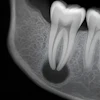
Law describes the shift from 2D to 3D imaging not as a technical upgrade but as a fundamental change in what orthodontists can actually know. Before cone-beam computed tomography (CBCT) became standard, finding an impacted tooth required triangulation using flat images and educated guesswork.
Now, though with CBCT, the support structures are visible, the bone envelope is clear, and the limitations of tooth movement can be assessed before treatment begins. For adult patients specifically -- where periodontal considerations, preexisting restorations, and airway factors complicate nearly every case -- that visibility changes what's possible and what's advisable.
It also changes the patient conversation. Law notes that when a patient can see a 3D rendering of their own anatomy on a screen, rotate it and interact with it, the clinical rationale for a treatment plan becomes self-evident rather than requiring translation. Questions about airway -- increasingly common in adult orthodontic consults -- can be addressed in real time, with the appropriate referrals made while the patient is still in the office.
That interdisciplinary facet is another major thread in the conversation. Law's background includes time as a general dentist before his orthodontic training, and he speaks plainly about how that shapes his approach: He wants to know what the general dentist is seeing, what restorative work is planned, and what sleep therapy conversations are already underway before an orthodontic treatment plan is finalized. The goal is a coordinated case with a clear quarterback, not parallel tracks running independently.
On team communication, Law describes Smile Doctors' approach as building a detailed, templated treatment plan that every team member -- clinical and administrative -- can access and act on. The doctor stops being the bottleneck. The assistant, the front desk, and the remote check-in staff all know where the case is and what comes next. That structure, he says, is what frees him to do the part of orthodontics he values most: getting to know the patient as a person.
Dr. Law can be reached at [email protected].
Listen to the full conversation below.