The concept of "veneer regret" comes up often among patients and in the media, but it looks different from an oral surgeon's perspective than a general dentist's perspective.
In this article, oral surgeons Drs. Shawn Lynn of Riverside Oral Surgery and Andrew Horowitz of Nyomis Oral Surgery share why case selection and diagnosis matter critically before veneers are placed, what patients often don't understand about the permanent nature of the procedure, and what can go wrong later when veneers are used to correct problems they were never intended to fix.
Dr. Shawn Lynn: Understand the limitations of veneers
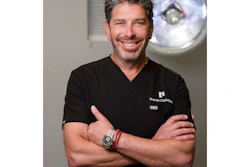
 Dr. Shawn Lynn.
As with all elective surgical procedures, case selection is paramount and cannot be stressed enough.
Case selection can be anything from knowing the specific procedure’s limitations in addition to the risks, benefits, and, of course, the potential complications. Veneers, as with a fair number of dental procedures, involve prepping or cutting down the tooth to attempt to improve aesthetics, possible function, and confidence if the results meet the expectations.
Veneers are designed to be minimal in the amount of tooth structure that is ultimately removed; however, that removal is permanent. Depending on the original arrangement of the teeth, that preparatory work can be more invasive or push the limit of what the veneer can do. There are instances where orthodontic movement of the teeth prior to veneer prepping would be quite beneficial, as it may reduce the amount of tooth structure to be removed.
Additionally, all dental veneers, fillings, inlays, onlays, and full-coverage restorations require heightened levels of oral hygiene to maintain the dental work that was performed. If oral hygiene is poor, that work develops decay and ultimately must be redone, requiring more tooth to be cut down. Managing patient expectations, patient education, and close follow-up with hygiene is essential.
From an oral surgeon’s perspective, it is pretty simple. No dentistry lasts forever, none of it. I see failed restorations, failed root canal therapy, fractured teeth, and teeth with periodontal issues daily.
If it is not approached correctly, failed veneer work can be financially and emotionally very hard on a patient. My role in that instance, if the teeth were truly compromised long term, would be to remove the compromised tooth and move forward with replacement. Luckily, I rarely see failed veneer work in my referral network.
Truly knowing our patients and what their expectations are is where the rubber meets the road. Knowing what a restoration, in this particular instance veneers, can and can’t do is paramount.
Dr. Andrew Horowitz: Veneers are a lifelong commitment
What are your thoughts on veneer regret?
Veneer regret is real. While veneers done right can be very aesthetically pleasing, “done right” is the operative phrase. Regret is not an uncommon notion, because oftentimes patients are unhappy with the shape and color of the veneers and even more dramatically unhappy with the way they’ve changed the appearance of their face.
 Dr. Andrew Horowitz.
What do patients not understand about the permanent effects of these procedures?
Dentists do a great job explaining how only small adjustments of the teeth are necessary to have veneers placed. Unfortunately, if a patient regrets having the veneers placed, sometimes it’s only at that time do they realize that the small adjustments that the dentist did on a tooth are now permanent.
I don’t believe in veneers being done wrong. The dental community is very well trained, and procedures, such as veneers, are an excellent way to treat some aesthetic concerns.
Where I believe there can be issues is in diagnosis -- determining what the ideal treatment is for a particular aesthetic issue. Ultimately, it’s our job as specialists of the head and face and oral cavity to look at things in a holistic and comprehensive way to diagnose and treat aesthetic concerns appropriately.
What do you see downstream? Do you see cases where veneers have gone wrong, requiring that an oral and maxillofacial surgeon fix it? Do patients later need functional work, such as implants or bone repair, after aggressive or failed cosmetic work? Do patients sometimes pursue veneers to fix a problem that is really a bite or jaw alignment issue?
Yes, using veneers to fix the bite or jaw alignment is sometimes done. And that speaks to my comment about proper diagnosis. If veneers are used in these cases, they often become very bulky, not very aesthetically pleasing teeth that have that “Chiclet” appearance. Even worse, they can lead to severe periodontal issues and potentially tooth loss.
From an oral surgeon’s perspective, what should patients know before pursuing veneers?
The most important thing I would tell patients about veneers is that once they have them placed, you can’t go back to having your tooth the way it was before. While veneer preparations are very conservative, many patients are familiar with a similar phenomenon: needing a filling for a small cavity, then a root canal on that same tooth a few years later, and eventually having the tooth taken out and replaced with an implant. If the tooth doesn’t really need to be touched, should it be? In other words, be sure you want these veneers before you have them done.
The comments and observations expressed herein do not necessarily reflect the opinions of DrBicuspid.com, nor should they be construed as an endorsement or admonishment of any particular idea, vendor, or organization. Some content may be AI-generated.