BeautiLink SA is a self-adhesive resin cement engineered for zirconia restorations that combines high strength, bioactive Giomer Technology for fluoride release, excellent bond strength without primers, and easy cleanup. The cement's bioactive properties provide long-term protection against secondary decay and bacterial contamination while simplifying the cementation procedure.
- Giomer Technology releases and recharges fluoride and beneficial ions throughout the restoration's lifetime, providing antibacterial and acid neutralization effects.
- No primer required for excellent bond strength to zirconia, though optional primers can enhance bonding to glass ceramics.
- Eight-year clinical data from University of Florida showed zero failures or decay in restorations using Giomer-based materials.
- Ideal gel phase after brief tack cure allows excess cement to peel away cleanly for simplified cleanup and easier interproximal removal.
- Three shade options (clear, ivory, opaque) with different cementation techniques to maintain aesthetic control and clinical predictability.
What do dentists consider an ideal dental cement? Clearly, strength is important. Ease of use is essential. The ability to potentially fend off secondary decay is a great addition. Easy cleanup is literally a dream quality of a great cement.
Theoretically, cementing to zirconia is more difficult than cementing to other materials. There is more space present between the crown and the tooth, so the fit is usually less snug. Bonding to zirconia is possible but without the adhesive ability present when using lithium disilicate.
Many current cements include one or two of the qualities above. Ideally, we would love a product that includes all four components. This article discusses the attributes of Shofu’s BeautiLink SA, a self-adhesive resin cement that features Shofu’s Giomer Technology and offers high strength, three shades, and easy cleanup.
Giomer properties
 Dr. Peter Auster.
Shofu’s exclusive Giomer Technology is a bioactive addition to the cement. It allows BeautiLink SA to release and recharge fluoride and other ions for the lifetime of the restoration. This recharge provides antibacterial and acid neutralization effects, which can reduce caries-causing bacteria in the preparation and at the margins of the restoration.
A University of Florida Dental School study showed no failures or decay in any restoration for up to eight years.1 This property is particularly valuable for disabled patients, elderly patients, and patients who have poor home care, but it is an excellent property for any patient.
Priming agent use
BeautiLink SA bonds extremely well to zirconia without a primer.2 Bond strength can be enhanced further by adding BeautiBond Xtreme or another primer. The addition will increase its bond strength to glass ceramic materials as well.
Cementation technique
There are three shades of BeautiLink SA: clear, ivory, and opaque. The clear and ivory shades require the same technique of cementation. The opaque shade has different requirements that will be discussed later.
The first steps for cementation for clear or ivory cement when cementing a zirconia restoration are as follows and as seen in the attached photos:
- Try the restoration in, check contacts and occlusion, and take an x-ray to validate marginal fit.
- Use air abrasion to aid in retention of the restoration.
- Treat the restoration with a “cavity cleaner” such as Ivoclean (Ivoclar) or Zirclean (Bisco). This is an essential step to eliminate contaminants from saliva, which can inhibit proper bonding. Phospholipids in saliva deplete zirconia bonding sites from interacting with primer or cement. Cleansers clean a contaminated surface, leaving more sites to interact with the MDP (10-methacryloyloxydecyl dihydrogen phosphate) bond or cement.
- Clean the tooth itself with Consepsis (Ultradent) or pumice.
- Place Vaseline on the distal and mesial of the teeth next door to the prep. This will create ease in removing interproximal cement. The author also places Vaseline on the mesial and distal of the crown to be placed.
- Place BeautiLink SA into the zirconia crown.
- Place the zirconia crown onto the preparation and have the patient close with a cotton roll and/or a bite stick. Make sure margins are all sealed and the bite is correct.
- Light-cure the four corners of the crown for one to two seconds with an LED curing light.
- Remove residual (now rubbery) cement and floss the margins.
- Light-cure each surface for 10 seconds with an LED light.
The first six steps apply to the opaque shade as well.
When using the opaque cement, wait two to three minutes after seating the restoration to allow the material to self-cure. Remove the excess cement, then light-cure the four corners of the crown for 10 seconds with an LED curing light. Hold the restoration in place for approximately five minutes after light curing to allow the chemical cure to complete.
Long-term clinical success
While the handling characteristics of a cement often determine the clinician's first impression, its long-term clinical performance ultimately determines whether it earns a permanent place in a restorative practice. Modern zirconia restorations are expected to function successfully for many years under significant occlusal forces, making cement selection a critical component of restorative longevity. A cement must not only provide excellent initial retention but also maintain its physical properties in the challenging oral environment.
BeautiLink SA demonstrated excellent resistance to water sorption and solubility during laboratory testing, helping preserve the integrity of the marginal seal over time. Maintaining this seal is essential because marginal breakdown can allow bacterial penetration, postoperative sensitivity, and recurrent caries.
The incorporation of Giomer Technology provides an additional level of protection by continuously releasing and recharging fluoride and other beneficial ions throughout the life of the restoration. Rather than functioning as a passive luting agent, the cement actively contributes to the health of the surrounding tooth structure.
Editor's note: In the video below, Dr. Peter Auster relates his experience using BeautiLink SA and why, he says, it's the only cement he uses.
Another important clinical consideration is efficiency. Today's restorative practices demand materials that simplify procedures while maintaining predictable outcomes. Eliminating unnecessary clinical steps not only reduces chair time but also minimizes the opportunity for technique-sensitive errors. Because BeautiLink SA bonds effectively to zirconia without requiring a separate primer, clinicians can achieve excellent retention with a simplified workflow. For situations where additional bond strength is desired, particularly with glass ceramics, the optional use of BeautiBond Xtreme offers even greater versatility without complicating the overall procedure.
Cleanup has become an increasingly important feature for clinicians who routinely cement zirconia restorations. Excess resin cement can be frustrating to remove, particularly from interproximal areas and subgingival margins. BeautiLink SA reaches an ideal gel phase after a brief tack cure, allowing excess cement to peel away cleanly with minimal effort. Combined with the author's recommendation of applying a small amount of petroleum jelly to adjacent teeth and crown surfaces, cleanup becomes significantly easier and more predictable.
Ultimately, selecting a cement should involve more than simply choosing the product with the highest bond strength. The ideal material combines predictable retention, bioactive benefits, efficient handling, excellent aesthetics, and simplified cleanup.
BeautiLink SA successfully brings these characteristics together in a single product, making zirconia cementation less technique-sensitive and more predictable. BeautiLink SA represents an outstanding contemporary option for clinicians seeking a dependable resin cement that streamlines restorative procedures while supporting long-term clinical success.
Evaluator summary
 Catapult Education.
Eight Catapult clinicians participated in an evaluation of BeautiLink SA. This product is specifically engineered for zirconia restorations but can be used for lithium disilicate as well. Evaluators were impressed with its smooth handling, viscosity, and ease of removal.
They also appreciated the fact that it includes Shofu's Giomer Technology. The educators commented on the simplified workflow. They liked the fact that the product has high bond strength without the need for a primer, and many identified the combination of Giomer Technology and the product's overall value as features that helped distinguish BeautiLink SA from other self-adhesive resin cements.
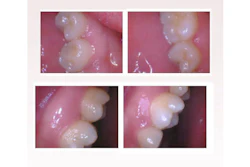
As one evaluator commented, "This is a good product and the value is excellent. The bioactive properties are especially valuable for geriatric and high-caries patients.” The majority of evaluators stated that they would recommend BeautiLink SA to a colleague. Based on these collective experiences and the product's overall clinical performance, BeautiLink SA has earned the Catapult Vote of Confidence™. Figure 1: Microetching a zirconia restoration with CoJet sand.All images courtesy of Dr. Peter Auster.
 Figure 2: Placement of Ivoclean (Ivoclar) to cleanse the restoration and remove contaminants.
 Figure 3: Treating the preparation with Consepsis (Ultradent).
 Figure 4: Placing BeautiLink SA automix into the zirconia crown.
 Figure 5: Simple removal of excess cement on the buccal surface of the restoration.
 Figure 6: Simple removal of excess palatal cement. Using petroleum jelly is particularly valuable when removing cement from splinted crowns for teeth #2 and #3.
References
- Gordan VV, Mondragon E, Watson RE, Garvan C, Mjör IA. A clinical evaluation of a self-etching primer and a giomer restorative material: results at eight years. J Am Dent Assoc. 2007 May;138(5):621-7. doi: 10.14219/jada.archive.2007.0233.
- M Cowen, M Gilmartin, JM Powers. Laboratory evaluation of BeautiLink SA cement. Dental Advisor web site. https://dentaladvisor.com/clinical-evaluation/beautilink-sa/#. Accessed September 15, 2026.
Dr. Peter Auster continues thirty-five years of cosmetic and reconstructive dentistry in his private practice in Pomona, NY. He is a fellow of the International College of Dentists and the American College of Dentists. Auster has spent 12 years in leadership positions at the American Academy of Cosmetic Dentistry, including serving as the 2022 chair of their professional education committee. He also founded their New York affiliate, the Greater New York Academy of Cosmetic Dentistry. Auster takes great pride in providing 12 years of volunteer dentistry abroad and is the recipient of an ADA award for international voluntary service.
The comments and observations expressed herein do not necessarily reflect the opinions of DrBicuspid.com, nor should they be construed as an endorsement or admonishment of any particular idea, vendor, or organization.