Tusk Practice Sale's Q4 2026 dental M&A report shows that while DSOs and private equity groups are expanding aggressively with new capital, practice owners face tighter lending conditions, lower margins, and fewer traditional doctor-to-doctor succession options, requiring strategic planning around partial sales, DSO partnerships, or alternative exit paths.
- DSO expansion continues: Private equity-backed DSOs are entering new markets and preparing for recapitalizations or IPOs, creating more buyer options for practice owners.
- Financing tightened significantly: New SBA lending rules require 1.25 debt service coverage ratio, 36-month seller note standby, and 10-year maximum loan terms, making associate buyouts harder.
- Specialty growth diverges: Pediatric dentistry grew 126% since 2001 while oral surgery, orthodontics, and periodontics grew 10% to 18%, shifting buyer preferences and deal activity.
- Doctor-to-doctor transitions declining: Practice ownership dropped from 85% in 2005 to 73% while DSO affiliation more than doubled to 16.1%, with younger dentists increasingly choosing employment over ownership.
- Multiple exit paths are available: Owners can sell to associates, DSOs, or private equity groups, or retain partial equity while taking money off the table and maintaining leadership roles.
Tusk Practice Sales’ fourth-quarter 2026 market report recaps year-to-date trends while looking ahead to what dental practice owners can expect in 2027.
The report examines the forces shaping the dental mergers and acquisitions landscape: Dental service organizations (DSOs) and private equity groups expanding into new markets, anticipated recapitalizations and public offerings, tighter lending conditions, specialties growing at very different rates, and mounting challenges for doctor-to-doctor transitions.
Here are five key takeaways for practice owners planning for the year ahead.
DSOs and private equity groups continue expanding
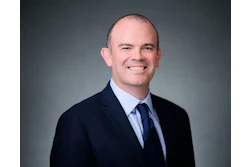
 Ryan Mingus.
Activity during the third quarter was concentrated among groups with capital and clear integration plans, with much of the announced volume coming from add-on acquisitions and de novo openings rather than platform-level M&A.
On October 2, Heartland Dental added Foundation Dental Partners, bringing 33 supported practices across Georgia, Tennessee, South Carolina, and Kentucky into its network. Dental Care Alliance and Affordable Care also reset their capital structures this year, extending maturities to 2031 and shifting their focus toward operations.
Several DSOs expanded into new states where they had no previous presence. In 2026, the market saw a broad mix of these moves, spanning implant and pediatric specialists, general dentistry platforms and even a Canada-based group entering the U.S. for the first time.
Regulation is another factor shaping this activity. In North Carolina, for example, Session Law 2026-41, effective July 7, 2026, eliminated the requirement that dental management arrangements between practices and DSOs be submitted to the State Board of Dental Examiners for review before taking effect. This means fewer administrative delays and lower transaction costs, helping groups move faster.
For practice owners, this expansion means a broader pool of potential buyers as DSOs and private equity groups continue to enter new markets.
Many long-held DSOs are preparing to head to market
Private equity sponsors have held many dental platforms longer than originally planned. PitchBook’s second-quarter 2026 healthcare services report found that 20 or more dental companies backed by private equity had been held for seven years or longer, and Tusk expects many are preparing to go to market in the next 12 months.
In the months before going to market, several DSOs will look to partner with healthy practices to grow earnings before interest, taxes, depreciation, and amortization (EBITDA) and strengthen their valuations. As new capital enters the market, Tusk anticipates a resurgence in M&A activity.
However, buyer appetite remains selective. Private equity deal count in dentistry fell 37.2% in 2025, yet well-run practices remain in demand because strong earnings are essential to any successful exit.
DSOs are drawn to lower-risk businesses with high margins, $300,000 to $3 million in EBITDA and operations that fit their existing systems. Groups generating more than $3 million in EBITDA continue to face greater scrutiny as buyers evaluate the risks associated with larger investments.
Some groups are also considering the public markets. Park Dental Partners, currently the only U.S. dental service organization to complete an initial public offering (IPO), priced its offering in December 2025, and several other groups are evaluating the same path.
Partnering with a public company can change what a doctor owns and how decisions are made. Rollover equity may convert to publicly traded stock subject to a lock-up period while growth decisions are increasingly measured against quarterly results.
For owners evaluating a potential partner, a group’s recapitalization or initial public offering plans are important diligence questions, alongside its capital position and capacity to make future acquisitions.
“DSOs are expanding, with the global DSO market projected to grow 17.4% a year through 2032, and they are going to continue to do so," said Kevin Cumbus, president and founder of Tusk. "In today’s difficult lending environment, many associates and recent dental school graduates are waiting longer to become owners. The 33.8% of dentists aged 55 and up will need to consider expanding their options to include a full or partial sale to a DSO,” he said.
Financing is tighter, and margins are under pressure
On September 16, the U.S. Federal Reserve raised its target range by 25 basis points to 3.75% to 4%, and new U.S. Small Business Administration (SBA) lending rules took effect October 1. According to reports, lenders now look for a debt service coverage ratio of 1.25, a seller note on full standby for 36 months, an independent quality-of-earnings review on deals above $3 million, and a 10-year maximum loan term. Because most associates and new owners finance a practice purchase with an SBA-backed loan, these changes directly affect doctor-to-doctor transitions.
Practice economics are tight on the other side of the ledger. According to the ADA’s Health Policy Institute, dental reimbursement has risen 19% since January 2021 while inflation has risen 27%.
Over five years, general dentists’ practice expenses grew 4.9% while revenue grew just 1.4%. Staffing adds to the strain: Nearly 37% of dentists are recruiting hygienists, and 87.7% of those dentists describe the search as very or extremely hard. Policy is shifting as well. Medicaid provisions under the One Big Beautiful Bill Act began phasing in October 1.
Together, these pressures reward owners with clean, well-documented earnings and a realistic view of whether their successor can finance a purchase.
Specialties are growing at very different paces
Since 2001, the profession as a whole has grown by 25.5%, but specialties have not grown evenly. Pediatric dentistry has expanded by 126% and endodontics by 42%, while oral surgery, orthodontics, prosthodontics and periodontics have each grown between 10% and 18%. Deal activity has diverged as well, with private equity deal count in oral surgery rising 9.1% in 2025 even as it fell across dentistry overall.
These shifts are also changing what some buyers look for. Orthodontic service organizations that once focused exclusively on pure-play orthodontic practices are showing more interest in multispecialty practices with both orthodontic and pediatric service lines, since patients naturally progress from one service to the other.
These practices are not the right fit for every buyer, but buyers view them more positively than in past years. The shift comes as orthodontist ownership declines, falling from 80% in 2018 to 68% in 2025 among American Association of Orthodontists survey respondents.
The doctor-to-doctor exit is narrowing
Practice ownership among dentists has dropped from 85% in 2005 to 73%, while DSO affiliation more than doubled from 7.2% in 2015 to 16.1% in 2024. Ownership is concentrated among later-career dentists: Close to 34% of dentists are 55 or older, and the average retirement age has risen from 64.7 in 2001 to 68.7.
The dentists who would be their natural buyers are earlier in their careers, and a growing share are choosing group employment instead. Among dentists up to 10 years out of school, 26.5% are DSO-affiliated, compared with 9.1% of those 25 or more years out.
Financing makes the gap harder to close. The class of 2025 graduated with an average of $297,800 in education debt, and the average orthodontic resident graduates with $567,000 in federal student loan debt.
Consider a practice generating $1.5 million in annual revenue. If it is priced at an illustrative 70% of revenue, the price is $1.05 million. Even with a 10% to 25% seller note, the buyer still needs to borrow roughly $790,000 to $945,000. At an interest rate near 10%, a $900,000 loan over 10 years costs about $11,900 a month, leaving a graduate with $300,000 in education debt owing roughly $1.2 million before living expenses or the cost of running the practice are factored in. The associate in your practice may be your most natural buyer and still be unable to finance a purchase.
That does not leave owners without options. Owners have three main paths to consider: selling to an associate, selling to a DSO or private equity group, or selling a stake and continuing to lead.
Owners do not have to sell 100% of their practice. Selling a percentage to a DSO or private equity group allows them to de-risk, take money off the table, and keep their leadership role, with retained equity that can participate in a future sale.
A DSO transaction does not have to leave an associate behind, either. Many owners are gifting partnership stakes to their associates as part of the deal, giving them a route to ownership without a buy-in loan, though the arrangement should be negotiated and documented with legal and tax counsel involved early.
The "Q4 2026 Dental Market Report" points to a market where DSOs are still expanding and a new round of capital may be on the horizon, but where financing, margins, and successor economics are reshaping how owners should plan an exit. For owners five to 10 years from a transition, that time is an advantage. Comparing every path with real numbers today creates more options later.
For the full analysis, download the full Q4 2026 Dental M&A Market Report.
Editor's note: References are available upon request.
Ryan Mingus is managing director of Tusk Practice Sales and has more than 12 years of sales and leadership experience in the dental and healthcare industry, most recently as the business development director for strategy and optimization at Align Technology Inc. Mingus earned his bachelor's degree in economics and business from the Virginia Military Institute and his Master of Business Administration degree from the University of San Diego. He also held the rank of captain in the U.S. Army National Guard.
The comments and observations expressed herein do not necessarily reflect the opinions of DrBicuspid.com, nor should they be construed as an endorsement or admonishment of any particular idea, vendor, or organization.