Most practices have a gut feeling about whether their marketing is working. Far fewer have proof.
MouthWatch surveyed 448 dental professionals in June 2026 about what is bringing in new patients, what they spend to get them, and how they feel about the results. Respondents came from solo practices, group practices, dental service organizations, federally qualified health centers, mobile and teledentistry providers, and specialty practices. Clinicians' average satisfaction with their marketing landed at 6 out of 10. About a third (31.9%) rated their marketing at an 8 or higher, while 37.5% gave it a 5 or below.
Here are four takeaways worth your time.
Referrals still dominate, but digital is closing the gap.
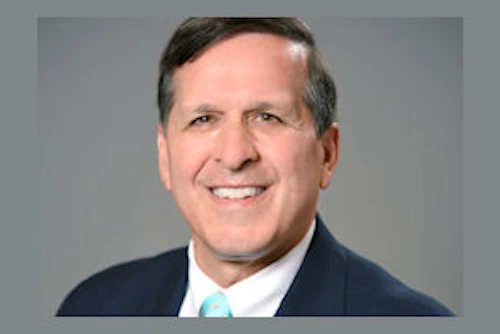
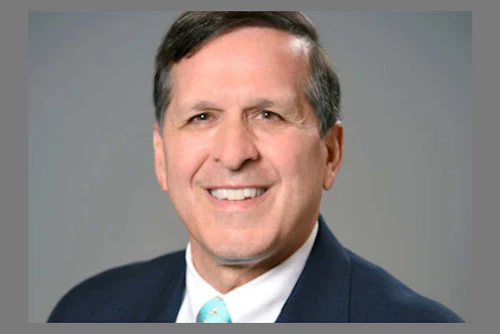
 Jon Cerbie.
Word-of-mouth and referrals remain the leading source of new patients, cited by 66.1% of respondents. That number is not surprising. What matters is what is behind it.
Social media came in at 55.4% and Google search at 54.9% -- both within reach of referrals and both channels where practices have more direct control than they do over organic word-of-mouth. Insurance directories ranked fourth at 45.3%.
The takeaway is not that referrals are losing ground. It is that digital has become a genuine acquisition channel rather than a secondary experiment. Practices treating social and search as optional are leaving a meaningful share of new patient traffic on the table.
Most practices spend less than $1,000 per month on marketing and know it might not be enough.
Nearly half (46.4%) spend less than $500 per month. Another 19.4% spend between $500 and $1,000. Only 8.7% spend more than $3,000.
That is not necessarily wrong. Practices with strong referral networks or tight local markets may not need heavy investment. But among those spending less than $500 per month, satisfaction scores were notably lower, suggesting that underinvestment and underperformance tend to coincide.
The cost per new patient tells a sharper story. About 34.8% of respondents did not know their cost per new patient. Among those that did, the most common answer was less than $100. Whether that reflects genuine efficiency or an incomplete accounting of marketing spend is worth examining before accepting it as a benchmark.
Video and patient testimonials are the most effective content and the most underused.
Patient testimonials and before-and-after images led in perceived effectiveness. Educational videos and social media content were also rated highly.
The gap is between what works and what gets done. Video production was the top barrier to consistent content, cited by 44.7% of respondents. Time constraints followed at 43.8% and ideas or inspiration at 28.6%.
This is a solvable problem, yet many practices are not solving it because they are treating video as a production project rather than a documentation habit. The bar for effective patient-facing video is lower than most dentists assume.
Practices are willing to invest but want better ways to measure results.
When asked what would make them more likely to increase marketing spend, 54.7% of respondents said better tools to track return on investment. Better marketing education came in at 47.1% and more staff support at 40.2%.
The underlying message is that a willingness to invest is not the obstacle. Confidence that the investment is working is.
Attribution in dental marketing is genuinely difficult. A patient who found the practice through Instagram may book through a Google search and tell the receptionist they were referred by a friend.
Clean data is hard to get. But practices that build even a basic tracking habit -- asking every new patient how they found the practice and recording the answer consistently -- tend to make better decisions than those flying entirely on instinct.
See how your numbers compare in the 2026 Dental Practice Marketing Report.
Jon Cerbie is a lifecycle marketing manager at MouthWatch, where he helps shape marketing initiatives focused on dental technology and practice growth. Through content, digital campaigns, and lifecycle programs, Cerbie works to connect dental professionals with tools and resources that drive education, engagement, and practice growth.
The comments and observations expressed herein do not necessarily reflect the opinions of DrBicuspid.com, nor should they be construed as an endorsement or admonishment of any particular idea, vendor, or organization.