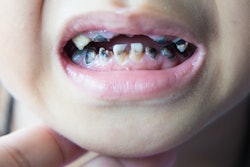
Machine-learning models built mostly on socioeconomic data may help public health programs identify groups at high risk for dental caries, according to a study published recently in Caries Research.
Researchers from the New York University (NYU) College of Dentistry and two Brazilian universities applied several machine-learning algorithms to data from 23,726 participants in Brazil’s 2023 national oral health survey (Caries Research, October 10, 2026).
They divided participants into three age groups: 12-year-olds, adolescents ages 15 to 19, and adults ages 35 to 44. The models used 11 predictors, including wealth, household density, race, access to piped water, dental insurance, and time since the last dental visit, to predict untreated caries and decayed, missing, and filled teeth (DMFT) scores.
Wealth and household density were the strongest predictors of caries risk in every age group. The prevalence of untreated caries rose with age, from about 37% among 12-year-olds to about 53% among adults.
Among 12-year-olds, 62.5% of those without piped water had untreated caries compared with 35.5% of those with access. Models that omitted clinical exam data still performed well, which suggests socioeconomic and self-reported information alone could help health officials decide whom to prioritize for exams. The models’ predictive accuracy was modest for children and strongest for adults.
The study used cross-sectional data from urban areas only and has not been validated externally. The research team plans to run a similar analysis using U.S. data from the National Health and Nutrition Examination Survey. Previous research has also explored using AI to detect early childhood caries on individual teeth.