The future of successful dentistry depends not just on clinical skill but on genuine human connection -- listening to patients, validating their concerns, and showing authentic presence.
- Presence as protocol: Simple acts like 30-60 seconds of genuine interest and acknowledging patient emotions build trust faster than advanced technology.
- Shift from interesting to interested: Instead of impressing patients with credentials, focus on truly hearing their concerns, fears, and what matters most to them.
- Practical connection strategies: Use validation by noticing emotions, ask questions that reveal the person beyond the chief complaint, and stay curious rather than purely clinical.
- Business impact: Patients who feel heard become loyal advocates and refer others without being asked, directly increasing case acceptance and practice growth.
In the 30-plus years I’ve been a dentist, I’ve placed thousands of crowns, rebuilt hundreds of smiles, and lectured around the world on the science of our craft. But lately, what keeps me up at night and what gets me out of bed in the morning isn’t how well I prep a tooth but a different challenge: What does it mean to truly care for another human being in this profession and still be financially successful?
Dentistry, like any discipline that deals with the human body, can lead us into a kind of reductionism. We’re trained to see teeth, diagnose problems, and restore function. But somewhere between the imaging software and the implant torque wrench, it’s easy to forget that the case in front of us isn’t just “a case,” it’s a person, a life, a story.
From being interesting to being interested
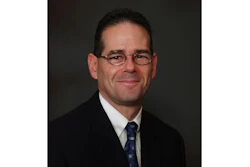
 Dr. Ricardo Mitrani.
Early in my career, fresh out of prosthodontics training, I felt the need to impress. I’d greet patients saying, “Great to see you, Mrs. Jones! I just got back from doing a Southeast Asia lecturing tour in Hong Kong, Singapore, and Indonesia.”
Then, one day, it clicked: I needed to switch my focus. Mrs. Jones had already chosen to visit my practice, so she didn’t need to hear more about me. She needed to be heard. Instead of trying to be interesting to her, I needed to be interested in her.
Presence as protocol
Young dentists often ask how to grow their practice, build trust, or stand out. In those conversations, I rarely talk about marketing or margins. Instead, I start with something simpler and much harder: Are you paying attention to what really matters?
We live in a world that prizes speed over stillness and markets certainty over curiosity. But in my practice, the biggest breakthroughs came not from the latest scanner but learning to listen: to symptoms, sure, but also to silences and the fears hiding in small talk.
I’ve come to think of this as a kind of clinical presence: a quiet commitment to show up not just for someone but with someone. That makes it easier to earn the priceless trust that enables you to give them the smile of their dreams.
The power of connection
How do you start connecting more deeply with patients, especially if you’re still finding your rhythm as a dentist? Here are a few cues:
- Validation looks like noticing. Is the patient nervous, distracted, or tense? Acknowledge this gently: “I sense you might be feeling a little uneasy. Want to talk about it?”
- Use micromoments. Just 30 to 60 seconds of genuine interest can build trust: “How’s your daughter’s move going?” or “You mentioned last time you were starting a new job -- how’s that working for you?”
- Be curious, not clinical. Ask questions that reveal the person, not just the chief complaint: “What matters most to you about your smile?” “How do you feel when you think about this treatment?”
When we truly see our patients, hear their fears, and meet them with presence, our practices begin to thrive. Case acceptance goes up and referrals multiply even without us having to ask, because the most consistent raving fans of your practice will be patients who felt listened to. When people feel seen, they tell others.
In other words, humanity isn’t just good ethics, it’s also good business!
A gentle provocation
If you’re early in your career or maybe feeling burned out, I offer you this: What if presence became part of your protocol? Often, all it takes is to be in the operatory without talking for a few seconds and give time for the patient to express themselves.
The future of dentistry won’t be shaped solely by new materials or digital workflows. It will also be shaped by how courageously we lean into our own humanity and hold space for the humanity of others.
Dr. Ricardo Mitrani, a Spear Resident Faculty member since 2016, is a leading voice in implant prosthodontics and aesthetic dentistry with a reputation built over 600 lectures in 30 countries. He maintains a private practice in Mexico City limited to prosthodontics and implant rehabilitation and is known for combining clinical precision with a human-centered approach.
The comments and observations expressed herein do not necessarily reflect the opinions of DrBicuspid.com, nor should they be construed as an endorsement or admonishment of any particular idea, vendor, or organization.