Every aligner case that leaves your clinic carries your name and reflects your professional responsibility. But not every case truly reflects your treatment plan. Often, it is developed by a technician or by an algorithm, and you see it only at the approval stage.
Let’s walk through how the workflow works today. The doctor takes the scan, uploads the records, and sends the case off. Somewhere, a specialist develops the plan. This could be a technician processing dozens of cases a day or an algorithm. Usually, the doctor does not know who is working on their case or which program is being used. A few days later, the finished treatment plan is returned for approval, accompanied by a phrase, “This follows our protocol.”
Legal and clinical responsibility for this case rests with the doctor, but clinical oversight does not. This disconnect, in my view, is one of the key problems facing the aligner industry.
Where the plan really comes from
 Khamzat Asabaev.
If the setup does not match what you intended for the patient, it is important to understand why that happened. In my experience, three factors influence the final plan, and the doctor's diagnosis is not always the most important one.
The first issue is supplier expertise. The person who creates your treatment plan has never examined your patient. They work based on a scan and a form, often under production quotas that allow only a few minutes for each case. A qualified technician can handle a case thoroughly if given enough time. But if they are rushing and simply applying a premade template, any resulting errors ultimately have to be corrected by a doctor.
The second constraint, which is less visible, is the software itself. If the program does not support certain tooth movement or allow it to be calculated correctly, the doctor simply cannot include that movement in the treatment plan. Instead, the system will suggest an alternative and present it as the recommended option. Therefore, the term “protocol” often masks the software’s limitation. As a result, the doctor is forced to work within the limits of the software, even if a different approach is clinically necessary.
The third limitation is commercial. Carefully developing a personalized treatment plan requires more time and resources, whereas standardized solutions allow for more cases to be handled with fewer specialists and significantly reduced costs. Therefore, when a company claims that a standardized approach is the best clinical practice, it is fair to ask whether this decision was truly made in the patient’s best interest or if it is primarily convenient and profitable for the provider.
Why planning technology still matters
Someone might argue that the quality of the software isn’t that important, since the foundation of successful treatment lies in the doctor’s diagnosis and clinical knowledge. And there is truth to that: No technology can compensate for an incorrect diagnosis or a lack of clinical experience.
Still, this does not mean that the tool used to create and implement a treatment plan is unimportant. If you are scheduled for surgery, you want an excellent surgeon to perform it, and you also want that surgeon to be holding a precise, high-quality scalpel. A great surgeon in the movies might be able to perform surgery even with a dull saw, but that is not the standard of care for a treatment that costs patients thousands of dollars.
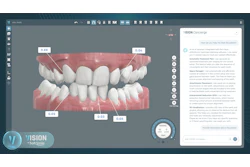
In treatment planning, the digital model is that scalpel: The more accurately it reproduces tooth morphology and gingival architecture, the more precisely it can assess overlaps and limitations when planning movements. This directly affects how predictable the treatment will be and how many adjustments the doctor must make.
The capabilities of different platforms vary significantly, and, unfortunately, the advertised features do not always reflect reality. Specialists should look closely at which tools are actually available during the treatment planning phase and to what extent they align with their specific clinical goals.
The doctor as the architect
The core question is, who is responsible for what during treatment planning? The orthodontist must stay in control and determine the diagnosis and treatment strategy, decide which teeth need to be moved and in what order, and decide what is sacrificed when compromise is necessary. The technician and software developer should help the doctor implement this plan, not determine it in the doctor’s place.
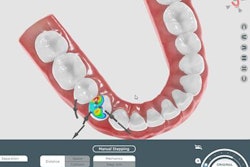
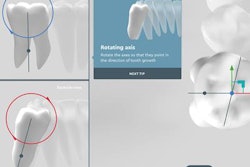
No orthodontist should manually calculate individual movements or attachment geometry, because calculations are a job for machines. Good treatment planning software should simulate movements step by step, detect collisions against accurate anatomy, flag biomechanically questionable steps, and allow the doctor to review and edit each movement at every stage in minutes.
Ultimately, the doctor pays for an inefficient process with their own time. Hours go into correcting an unsuitable plan or into constant back-and-forth with a technician -- time that could have been spent on patients or one’s personal life. If a doctor regularly spends their evenings fixing problems that arise due to tools or workflow organization, that process is not efficient.
So the practical evaluation of any aligner supplier comes down to a few questions. The first question is, will the doctor be able to view and edit each movement at every stage or only approve or reject it? Second, does the platform accurately represent the actual anatomy of the crown and gums and, ideally, the roots as well so that calculations of collisions and movements make sense? Finally, will the doctor know who or what created the setup they are approving? And when a doctor requests something that goes beyond the protocol, will the system accommodate them or refuse?
I believe that responsibility for a patient’s treatment and oversight of that treatment should rest with a single party. If software or a supplier takes on part of the planning process, it should be clear why and how the doctor remains in control.
Khamzat Asabaev is the founder and CEO of dental technology company SoftSmile. Asabaev was born in Grozny, Chechnya. Asabaev started his career at Linklaters, a leading global firm with headquarters in London. Asabaev is a graduate of Columbia Law School. Asabaev leads SoftSmile with the mission of making orthodontic treatment accessible and affordable.
The comments and observations expressed herein do not necessarily reflect the opinions of DrBicuspid.com, nor should they be construed as an endorsement or admonishment of any particular idea, vendor, or organization.